
By Rice University,First Published,
A newly developed bacterial cellulose manufacturing technique could lead to strong, multifunctional materials capable of replacing plastics.
What if the next generation of high-performance materials did not come from a factory filled with petroleum-based plastics, but from living bacteria?
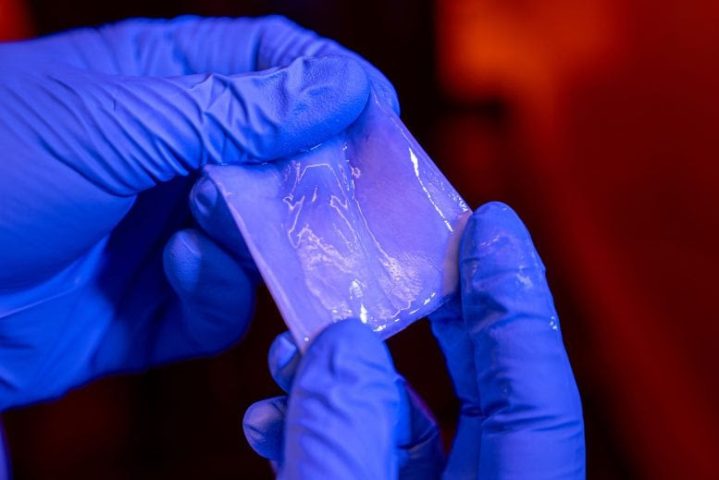
Scientists at Rice University and the University of Houston have developed a new way to turn bacterial cellulose into an ultra-strong, multifunctional material that could eventually replace plastics in products ranging from packaging to electronics.
Their findings, published in Nature Communications, describe a scalable manufacturing process that guides bacteria to build highly organized cellulose structures with remarkable strength and thermal performance.
Plastic waste remains a major environmental problem because synthetic plastics gradually break down into microplastics that can release harmful substances such as bisphenol A (BPA), phthalates, and carcinogens.
To explore a more sustainable alternative, the team led by Muhammad Maksud Rahman, assistant professor of mechanical and aerospace engineering at the University of Houston and adjunct assistant professor of materials science and nanoengineering at Rice University, focused on bacterial cellulose, one of the purest and most abundant natural biopolymers on Earth.
“Our approach involved developing a rotational bioreactor that directs the movement of cellulose-producing bacteria, aligning their motion during growth,” said M.A.S.R. Saadi, the study’s first author and a doctoral student in material science and nanoengineering at Rice.
“This alignment significantly enhances the mechanical properties of microbial cellulose, creating a material as strong as some metals and glasses yet flexible, foldable, transparent, and environment friendly.”
Controlling Bacterial Motion to Improve Material Strength
Bacterial cellulose fibers normally grow in random patterns, which limits their strength and performance. Using controlled fluid dynamics inside a specially designed bioreactor, the researchers aligned cellulose nanofibrils during growth, producing sheets with tensile strengths of up to 436 megapascals.
The team also added boron nitride nanosheets during synthesis, creating a hybrid material with even greater strength of about 553 megapascals. The modified material also showed improved thermal properties, dissipating heat three times faster than control samples.
“This dynamic biosynthesis approach enables the creation of stronger materials with greater functionality,” Saadi said. “The method allows for the easy integration of various nanoscale additives directly into the bacterial cellulose, making it possible to customize material properties for specific applications.”
Shyam Bhakta of Rice University contributed to the biological aspects of the research. Other collaborators included Pulickel Ajayan, Matthew Bennett, and Matteo Pasquali.
A Scalable Platform for Multifunctional Biomaterials
“The synthesis process is essentially like training a disciplined bacterial cohort,” Saadi explained. “Instead of having the bacteria move randomly, we instruct them to move in a specific direction, thus precisely aligning their cellulose production.
This disciplined motion and the versatility of the biosynthesis technique allows us to simultaneously engineer both alignment and multifunctionality.”
Because the process is scalable and completed in a single step, the researchers believe it could be used in a wide range of industries. Potential applications include structural materials, thermal management systems, packaging, textiles, green electronics, and energy storage technologies.
“This work is a great example of interdisciplinary research at the intersection of materials science, biology and nanoengineering,” Rahman added. “We envision these strong, multifunctional and eco-friendly bacterial cellulose sheets becoming ubiquitous, replacing plastics in various industries and helping mitigate environmental damage.”
Reference: “Flow-induced 2D nanomaterials intercalated aligned bacterial cellulose” by M.A.S.R. Saadi, Yufei Cui, Shyam P. Bhakta, Sakib Hassan, Vijay Harikrishnan, Ivan R. Siqueira, Matteo Pasquali, Matthew Bennett, Pulickel M. Ajayan and Muhammad M. Rahman, 1 July 2025, Nature Communications.
DOI: 10.1038/s41467-025-60242-1
The research was supported by the National Science Foundation (2234567), the U.S. Endowment for Forestry and Communities (23-JV−11111129-042) and the Welch Foundation (C-1668). The content herein is solely the responsibility of the authors and does not necessarily represent the official views of the funding organizations and institutions.
SOURCE
SCITECHDAILY NEWS