
By M. Khatun,First published,May 21,2026
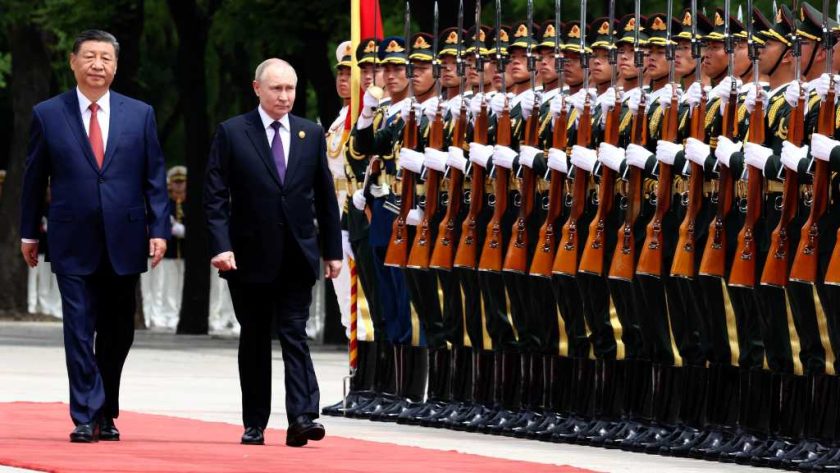
President Vladimir Putin concluded his state visit to China yesterday (May 20), marking what appears to be one of the most productive, forward-looking, and strategically significant Russia-China summits in recent years.
The visit generated substantial outcomes across trade, investment, energy, technology, connectivity, and geopolitical coordination, while also reinforcing the long-term trajectory of the Russia-China comprehensive strategic partnership through 2030 and beyond.
During the visit, Putin held extensive meetings with Chinese President Xi Jinping, Premier Li Qiang, and other senior Chinese leaders.
The diplomatic program included closed-door discussions, small-group talks, large-group talks, expanded delegation meetings, personal tea conversations, joint cultural and photo exhibition events, a joint press conference, official statements, as well as a state banquet. The overall atmosphere reflected a high degree of political trust, strategic understanding, and personal rapport between the Russian and Chinese leaderships.
Beyond symbolism and political messaging, the visit produced more than 40 cooperation agreements and documents covering a wide range of sectors ranging from energy, trade, investment, business cooperation, global cooperation to new energy, digital economy, advanced technology, transportation connectivity, logistics, education, and industrial coordination.
Most importantly, both sides issued a joint statement on further enhancing the comprehensive strategic coordination partnership and deepening good-neighborliness and friendly cooperation between the two countries in Beijing.
The extension of the landmark 25-year friendship treaty shows that China is eyeing a long-term close relationship with Russia. Putin’s visit to China was also aimed at finalizing price negotiations for Russian fuel exports, seeking favorable gas terms and leveraging global energy market disruptions with potential progress expected soon.
Another important outcome was China’s decision to extend its visa-free regime with Russia until the end of 2027, a move designed to facilitate travel, tourism, business exchanges, and people-to-people connectivity. At the same time, 2026 and 2027 have officially been designated as the China-Russia Years of Education, further institutionalizing long-term societal and educational cooperation between the two countries.
During Putin’s meeting with Premier Li Qiang, both sides also reaffirmed their commitment to advancing bilateral cooperation based on the 2026-2030 cooperation framework plan. This demonstrates that Moscow and Beijing are now moving beyond short-term transactional cooperation toward a structured, long-term strategic economic architecture.
Simultaneously, the 10th China-Russia Expo in Harbin, produced multiple concrete outcomes, including new commercial deals, investment partnerships, industrial cooperation initiatives, and expanded business linkages between Chinese and Russian companies. These developments reinforced the pragmatic and result-oriented character of Putin’s visit.
As discussed in our pre-meeting overview “How Putin’s China State Visit Will Yield More Than Last Week’s Trump-China Summit” the outcomes of the visit have largely validated our predictions.
Putin’s visit charted the future courses and generated notable achievements that would significantly contribute to advancing high-quality Russia-China trade, investment, business integration, transportation connectivity, strategic coordination, military cooperation and multilateral cooperation over the next five years leading up to 2030.
The Putin-Xi Personal Dynamics
There is also the personal component which is generally not on display during serious diplomatic events. However, Russia’s Pivot To Asia has long attended events involving the two men, and recall that at SPIEF in 2021, there was some jocularity between them with both on stage during the keynote plenary session cracking wry jokes.
Putin himself revealed that he played the piano for Xi in a private reception the evening before, with Xi accompanying him by singing some Chinese songs. That is generally not the rather stilted image displayed in public, but it does imply that in deeply private moments, Xi and Putin get along.
Although Trump did have flute lessons as a young boy, it is hard to imagine him doing much beyond his ‘YMCA’ dance routine let alone playing the flute – something neither Putin nor Xi we suspect would ever be seen doing, even in private. Also of note is that Putin defers to Xi as ‘Chairman’ in public, while is well aware of the symbolism of holding one’s glass lower than your senior when making toasts.
Trump Visit Comparisons
An important point about Putin’s visit is how different it was from Trumps. An important pre-summit detail everyone missed was that Russia sent its Foreign Minister, Sergey Lavrov to Beijing to meet with Xi a month earlier.
That is meticulous planning to detail. There was no such pre-emptive meetings held in China by senior US officials, although Marco Rubio, Lavrov’s equivalent, did accompany Trump to largely the same meetings.
Also, while the US flew in top corporate executives to gladhand and meet leaders, Putin’s visit deliberately coincided with the China-Russia Expo, showcasing hundreds of companies from both countries with attendees in the thousands.
That appears to be a rather more pragmatic and probably a deeper trade reach than 20 US CEO’s turning up. Also noted by the Chinese was the US rejection of any gifts provided upon departure.
While security is a valid issue, the rather crass way in which this was carried out will not have gone unnoticed. The Russians will be rather more polite and discreet.
The results point to a deepening and more diverse depth of bilateral trade development on the part of both Russia and China. That can be expected to may be more appealing and sustainable than the US current policy of constant flip-flopping and drop-of-the-hat trade threats and the imposition of tariffs.
In addition, Trump’s visit did not produce a joint statement, joint press conference, or announcements of any comprehensive cooperation framework during the visit. There were also no publicly announced major cooperation agreements or large-scale strategic documents signed during the visit.
In the absence of concrete agreements, Donald Trump’s visit to China concluded with largely symbolic gestures, while Beijing’s official readout remained vague despite White House’s later claims of commercial deals. Trump later said that Xi spent a substantial amount of time discussing Taiwan, but the US president had made no commitments on the matter.
The gap between rhetoric and substance underscores persistent mistrust and unresolved tensions shaping the broader bilateral relationship. Although the White House later released a fact sheet titled ‘Trump Secures Historic Deals with China’, China’s Ministry of Commerce on May 20 clarified only eight preliminary outcomes from the China-US economic and trade consultations. These mainly involved tariff arrangements, agricultural trade expansion, rare-earth export controls, Boeing purchases, and consultation mechanisms.
Short-term gains from U.S. exports such as agricultural goods and Boeing aircraft to China, driven by tariff concessions, may generate several billion dollars, but they do little to rebuild long-term trade trust, which the US is increasingly losing with China.
Reports surrounding diplomatic protocol controversies during Trump’s departure further reinforced perceptions of strained political trust between the two sides. There was so much distrust that, before the departure of the Trump team from China to the United States, everyone threw away Chinese gifts before boarding Air Force One. This went against general diplomatic norms and manners and did not go unnoticed by the Chinese authorities.
In contrast, Russia has been steadily developing long-term, structured cooperation with China, expanding from bilateral trade into broader global coordination. This divergence is reflected in the trade data: US-China trade fell sharply, dropping nearly US$50 billion, with bilateral trade declining 16.6% year-on-year to US$128.68 billion in the first quarter of 2026.
According to China’s General Administration of Customs, China-Russia trade reached US$85.24 billion in the first four months of 2026, up 19.7% year-on-year, At this pace, bilateral trade could exceed US$260 billion in 2026 and potentially reach nearly US$350 billion by 2030, rebounding from US$228.1 billion in 2025 after a record US$240 billion in 2024. If these trends continue, Russia will overtake the United States in bilateral trade value with China in the coming four years.
The visit also clearly demonstrated that Russia remains committed to its long-term “Pivot to Asia” strategy, with China continuing to serve as the central anchor of that geopolitical and economic reorientation. As Western sanctions, US tariffs threats, geopolitical fragmentation, and global strategic competition intensify, Moscow and Beijing appear increasingly determined to institutionalize a parallel framework of Eurasian economic, technological, financial, and strategic coordination – without the United States.
Any serious observer comparing the two high-profile visits within just four days, Trump’s China trip and Putin’s state visit, can clearly identify which summit was more substantive, strategically consequential, and forward-looking. Judging by the scale of agreements, political trust, institutional outcomes, and long-term strategic planning, Putin’s visit overwhelmingly stands out as the more productive and impactful engagement.
The real significance of the visit, however, lies not only in the agreements signed today, but in the broader message it sends about the future direction of Eurasian geopolitics. Russia and China are no longer merely expanding bilateral cooperation; they are steadily constructing a long-term strategic framework capable of reshaping trade, connectivity, technology partnerships, and global governance structures across Eurasia over the coming decade.
The Russian Delegation
The high-powered Russian delegation accompanying the China visit also underscored Moscow’s intent to deepen trade, investment, and strategic coordination with Beijing across key sectors.
The entourage included senior cabinet members and top executives from Russia’s largest state-owned and private corporations. Among them were Igor Sechin of Rosneft, Alexei Miller of Gazprom, and industrialist Oleg Deripaska, pointing to energy and heavy industry as central pillars of bilateral cooperation.
The delegation also features the leadership of major state institutions, including VEB.RF, Rosatom, and Roscosmos, signaling a push to expand collaboration in infrastructure, nuclear energy, and advanced technologies. Financial coordination was another key theme, with German Gref, Andrei Kostin, and Central Bank Governor Elvira Nabiullina joining the visit, an indication of efforts to strengthen bilateral financial mechanisms and reduce reliance on Western systems.
The presence of five Deputy Prime Ministers and eight Cabinet Ministers reflected the visit being backed at the highest political level, reflecting a coordinated strategy to integrate trade, investment, and other strategic sectors. The Chinese side reciprocated on a like-for-like basis in what can be expected to result in significant, highly institutionalized diplomatic, economic and corporate development strategies.
Key Takeaways from the Xi-Putin Meetings
China-Russia
The two day summit and press statements in Beijing between Putin and Xi showed that Russia-China relations have entered a new stage of strategic consolidation amid major changes in the international system. Through small-group detailed talks, expanded wider view discussions. symbolic diplomacy and joint statements, both sides projected an increasingly institutionalized and long-term partnership aimed at shaping the emerging multipolar world order.
They included de-dollarization, financial sovereignty, energy security, trade and investment, technology and AI, transport connectivity, sanctions resilience, military-strategic coordination, humanitarian and educational exchanges, media cooperation, BRICS-SCO coordination, Eurasian integration and Global South diplomacy, demonstrating the emergence of a comprehensive and institutionalized strategic partnership. The summit also underscored Russia’s long-term Pivot to Asia, strategic trust, and joint efforts to build a multipolar, post-Western international order through alternative financial systems, parallel Eurasian economic architecture and coordinated global governance reform.
A central conclusion is that Moscow and Beijing view their ties exactly as it says on the box – a Comprehensive (and durable) Strategic Partnership. Xi described China-Russia relations as “a new type of relations between major powers,” while Putin called them “self-sufficient, independent of external circumstances and a model for modern interstate relations.”
Xi also stated that China is interested in expanding cooperation with Russia in line with the country’s newly adopted 15th Five-Year Plan for 2026-2030 a document which outlines amongst other issues, a huge new national development programme, boost to the manufacturing and services sectors, national health, educational and maritime naval expansions, and moves to further protect the financial sector by boosting its sovereign wealth capabilities – including digital finance and expansion of the RMB Yuan in global trade.
The summit also carried major anniversary symbolism. 2026 marks the 30th anniversary of the China-Russia strategic partnership and the 25th anniversary of the Treaty of Good-Neighbourliness and Friendly Cooperation. Xi confirmed that both sides had agreed to extend the treaty.
Putin emphasized joint Russian-Chinese efforts to build a fairer global governance system based on sovereign equality and international law, while both Putin and Xi
affirmed close coordination within the United Nations, BRICS, the Shanghai Cooperation Organization, the G20, APEC and other institutions.
Economic cooperation occupied a central place in the talks. Both leaders emphasized the growing role of high value-added industries, technology and advanced manufacturing in bilateral trade. One of the most important developments was the near-complete transition to settlements in national currencies. Putin confirmed that almost all bilateral transactions (99%) are now conducted in Rubles or RMB Yuan, creating a stable financial system protected from external pressure and global volatility. This highlighted the accelerating de-dollarization of Russia-China economic relations.
Energy remained the strategic backbone of the partnership. Putin confirmed that Russia continues to be one of China’s largest suppliers of oil, gas, LNG and coal, while Xi emphasized the stabilizing role of energy cooperation. Amid Middle East instability and global energy uncertainty, the summit reinforced the growing interdependence between Russia as a resource supplier and China as a long-term consumer. Putin also highlighted Russia’s thriving cooperation with China in car manufacturing, biotechnology, pharmaceuticals, aircraft manufacturing and space exploration.
The composition of the Russian delegation further reflected the importance of energy and financial coordination. The participation of Alexei Miller, Igor Sechin, Alexander Novak, Elvira Nabiullina and Anton Siluanov indicated that sanctions resilience, energy security and financial coordination were major themes of the closed-door discussions.
Transport and Eurasian connectivity also featured prominently. The agreement on constructing a second railway line along the Zabaikalsk-Manzhouli Railway corridor reflected efforts to strengthen Eurasian logistics and trade infrastructure. Putin also talked up his support for linking the Eurasian Economic Union with China’s Belt and Road Initiative within the framework of a Greater Eurasian Partnership.
The summit also highlighted rapidly expanding cooperation in science, technology and innovation. Xi identified the digital economy, artificial intelligence and technological innovation as future growth areas, while agreements between Rosatom and the Chinese Academy of Sciences on nuclear energy, thermonuclear fusion and scientific training underscored the importance of technological sovereignty.
Humanitarian and educational cooperation also occupied an important place. Xi and Putin launched the “Russia-China Years of Cooperation in Education” This programme includes conferences, exhibitions, youth exchanges and joint research projects aimed at strengthening the long-term social foundation of bilateral relations. At present, Russian is taught at more than 200 universities and 125 schools throughout China. 66,000 Chinese students are currently enrolled in language courses in Russia, while over 20,000 Russian students are currently studying Chinese in China. This programme is set to be given a considerable boost by increasing academic exchanges, teacher-training schedules and larger numbers of scholarships and language training courses made available.
The implementation of the Russia-China University of Advanced Technologies initiative also expands technological and educational integration with 15 inter-university associations already set up and more to join them.
Visa-free travel, tourism growth and media cooperation were also highlighted as mechanisms for strengthening societal ties. The mutual China-Russia visa-free arrangement was extended to the end of 2027.
Symbolism
Tea
The summit’s symbolic dimension was equally important. The informal tea meeting between Xi and Putin reflected the exceptionally high level of personal trust between the two leaders, while the photo exhibition dedicated to Russia-China relations and TASS-Xinhua cooperation reinforced narratives of historical continuity, anti-fascist solidarity, civilizational partnership and media partnership.
In contrast, there is no such mechanism in the US-China journalistic relations. It is hard to imagine such a celebration without American journalists resorting to shouted questions about Taiwan, dictatorships or communism instead of just enjoying a few moments of comradery.
It should also be noted that US President Trump refused to participate in any Chinese food or drink and only consumed items prepared by the US side.
Putin has visited China 22 times and held more than 43 official meetings with Xi, highlighting the growing resilience of their partnership. Following the Ukraine crisis and deepening tensions with the West, Russia increasingly views China as its most important economic partner.
Both countries rely on each other as key stakeholders in the Global South and as defenders of multilateralism. Their personal trust has helped guide Russia and China toward a shared strategic direction on global and regional issues, while strengthening trade and connectivity ties.
As permanent members of the United Nations Security Council and major countries, China and Russia continue to adopt a strategic and long-term perspective and work together to fully implement the important common understandings reached by the two leaders.
Overall, the Beijing summit demonstrated that the Russia-China partnership is evolving into a comprehensive geopolitical, economic, technological and civilizational alignment.
Most importantly, it showed that Russia’s pivot toward Asia has become structural and long-term, while China continues consolidating its role as Moscow’s principal strategic partner and co-architect of the emerging multipolar international order.
Key Takeaways from the Putin – Premier Li Qiang Meetings
Putin-Li
The May 20 meeting between Putin and Premier Li also highlighted the increasingly institutionalized, practical and long-term character of Russia-China cooperation. Unlike the broader geopolitical focus of the Putin-Xi discussions, the talks with Li concentrated primarily on the governmental, economic and operational mechanisms driving bilateral relations.
These emphasized stable, long-term cooperation in trade, de-dollarization, energy, AI, digital technologies, transport, agriculture, humanitarian exchanges and intergovernmental coordination amongst growing global instability, and demonstrated that beyond high-level geopolitical alignment, Moscow and Beijing are steadily building a practical and resilient economic, technological and institutional framework to support their broader strategic partnership and long-term Eurasian integration.
They focused more on implementing agreements reached at the presidential level, and on the intergovernmental commissions and sectoral coordination mechanisms intended to support this. In other words, making sure the solid architecture is in place to carry out the directives of the two Presidents.
Economic cooperation remains central to these discussions. Putin noted that bilateral trade grew by over 10% in 2026 while also absorbing new trade diversification indicators. Both sides reaffirmed their commitment to implementing the long-term Russia-China Economic Cooperation Plan through 2030.
Particular attention was given to protecting bilateral cooperation from external pressure through the almost complete transition to settlements in national currencies. Putin emphasized that 100% of China-Russia bilateral transactions should be in Rubles and RMB Yuan, reflecting the deepening de-dollarization of Russia-China trade.
The talks also highlighted the broadening scope of economic cooperation. Putin identified energy, industry, space, agriculture, transport, logistics, digital technologies and artificial intelligence as priority areas for future joint projects.
The emphasis on AI and digital innovation reflects the growing strategic importance both countries attach to technological sovereignty and independent scientific development.
The 10th Russia-China Expo
Harbin
Many of the Russian and Chinese delegates also attended the 10th Russia-China Expo in Harbin, which prioritized non-energy, value-added sectors ranging from new technologies, the digital economy, robotics, and computer science to advanced engineering and civilian helicopter manufacturing. Over 1,500 companies from 46 countries and regions participated at this event, with nearly 300 Russian companies exhibiting their wares.
Also taking place at the same time was the 2026 China (Shandong)-Russia Local Economic and Trade Cooperation Conference, which brought together nearly 200 Russian companies, resulting in an MoU between Shandong and Russia’s Khabarovskiy Kray and multiple preliminary cooperation agreements across manufacturing, trade, logistics, and tourism.
These events showcase the G2G and B2B business matchmaking, covering regional, sectoral, and company-level data-driven interactions. No comparable business events took place between China and the United States during Donald Trump’s visit.
Decoding The Narrative of the Power of Siberia 2 Gas Pipeline Project
Pipeline
Putin and Xi also agreed on key parameters of the highly anticipated Power of Siberia 2 gas pipeline project, including its route and construction framework, although pricing terms were not disclosed. Hong Kong’s South China Morning Post, has reported that Russian Deputy PM Alexander Novak stated that both countries had entered the final stage of contract negotiations for the project, which has remained under discussion for nearly two decades.
According to a report by Al Jazeera, Russia and China had reached an understanding regarding the route and construction of the pipeline, although several key issues still require further negotiations. The planned 2,600-kilometer pipeline is expected to transport up to 50 billion cubic meters of natural gas annually from Russia’s Yamal gas fields to China via Mongolia.
As further official details and statements regarding the project are not yet fully available, it would be premature to provide an entirely accurate timeline or comprehensive explanation of all aspects of the project. As we noted earlier, the pipeline is not expected to become operational before 2034.
Although the political framework for the project has already been endorsed by Russia, China and Mongolia in September 2025, major work still remains, including pricing negotiations, financing arrangements and construction across difficult permafrost terrain.
Some Western and Ukrainian media portrayed Putin’s visit to China as a “failure” because no final agreement on this project was signed during the summit. However, this interpretation overlooks the broader strategic progress achieved during the discussions. Both sides reportedly agreed on the “main parameters” of the project, including the route and construction framework, suggesting that substantive negotiations are continuing.
The current Hormuz-related energy security tensions may actually accelerate the project in the future, as Beijing increasingly recognizes the strategic importance of securing overland energy routes less vulnerable to maritime disruptions. In this context, Power of Siberia 2 is not simply a gas pipeline, but a long-term Eurasian strategic energy corridor.
The project is also technically feasible. Gazprom has extensive experience constructing large-capacity pipelines through harsh Arctic and permafrost regions. Analysts generally agree that the main obstacle is not engineering capability, but pricing terms. China, unlike Russia, is not under immediate pressure to finalize the agreement quickly and therefore continues negotiating from a position of leverage.
When completed, the Power of Siberia 2 will significantly reshape Eurasian energy flows by redirecting large volumes of Russian gas from Europe toward Asia. Redirecting any of those supplies back to Europe if needed will not be an easy task, even if the European political stance softens.
The Russia-China Joint Statement 2026: Key Takeaways
Putin Document
Western media outlets are not paying attention to the broader outcomes and strategic achievements that occurred through the visit. The ‘Joint Statement’ document does not simply focus on bilateral trade or diplomacy; instead it outlines a long-term framework for economic integration, geopolitical coordination, technological cooperation, security coordination, and the gradual construction of a Eurasian-centered international order.
At the core of the statement is the assertion that Russia-China relations have reached “the highest level in history” and are now characterized by “maturity, self-sufficiency and immunity from external influence.” The document repeatedly emphasizes that the partnership is not temporary or tactical, but a durable strategic model based on sovereignty, non-interference, mutual benefit, and opposition to hegemonism.
The economic dimension of the statement demonstrates that both countries are institutionalizing a long-term Eurasian economic system.
Bilateral trade, which reached about US$240 billion in 2025, has expanded nearly tenfold compared to the early 2000s and now functions increasingly through national currencies rather than the US dollar. More than 99% of bilateral settlements are reportedly conducted in these, with this reach also extending to third party transactions involving other countries and especially the BRICS.
This reduces dependence on Western-controlled financial channels. The document explicitly commits both sides to expanding settlements in national currencies, deepening banking cooperation, strengthening capital market interaction, and coordinating macroeconomic policy.
This reflects a broader strategic objective: the gradual construction of a sanctions-resistant financial architecture independent from SWIFT and dollar-based settlements. China and Russia will strengthen contacts and exchanges in trade policy, deepen cooperation in key industrial sectors, and identify new growth points capable of sustaining long-term economic integration.
The statement also confirms actively expanding cooperation and increasing industrial coordination in the automotive, shipbuilding, civil aviation, metallurgy, chemical industries, mining, and advanced manufacturing industries.
For example, Chinese auto brands now account for more than half of Russia’s new car market, replacing many departed Western manufacturers. These are now manufactured or assembled in Russia (legislation was introduced in late 2024 to discourage direct auto exports to Russia, who wanted to acquire added value in the country) and include vehicles manufactured by Russia-China joint ventures and now only found in Russia, specifically developed for this market.
It can be expected that these will soon be produced in volumes for other export markets such as in Central Asia, where Russia’s supply chain experiences are superior to China’s.
In shipbuilding and logistics, Chinese participation in Arctic-class vessel construction and Russian Far East port modernization continues to grow. Civil aviation cooperation has also become increasingly strategic, particularly through expanded aviation component cooperation after Western sanctions disrupted Russian access to Boeing and Airbus supply chains.
Russia and China are ready to improve the quality and effectiveness of investment cooperation, increase investment protection mechanisms, and ensure the stability of production chains and supply chains under conditions of geopolitical fragmentation.
The statement repeatedly stresses the importance of protecting industrial production chains and supply routes. This is strategically significant because Russia and China increasingly view economic security as inseparable from geopolitical sovereignty.
The agreements therefore focus heavily on customs integration, “intelligent customs,” synchronized border modernization, digital trade procedures, one-window logistics mechanisms, and uninterrupted transport connectivity.
Russia-China cargo turnover across border checkpoints has risen steadily in recent years, while cross-border e-commerce trade has accelerated sharply due to sanctions-related reorientation of Russian imports toward Chinese markets.
The logistics component of the document is particularly consequential. Russia and China agreed to expand export-import rail transportation, increase China-Europe transit through Russian territory, synchronize railway border infrastructure, deepen cooperation on cross-border automobile bridges, continue development of the Europe-Western China transport corridor, and strengthen the Russia-Mongolia-China economic corridor.
More than 70% of China-Europe rail freight now passes through Russian territory. The Alataw Pass corridor in Xinjiang recorded over 3,000 train crossings before May 2026, nearly three weeks ahead of the previous year’s pace, while over 40% of those trains were either destined for or originating from Russia.
Rail cargo transport between the two countries has therefore become one of the most strategically important components of Eurasian trade diversification.
The statement also highlights the strategic role of the Northern Sea Route and Arctic connectivity. Cargo traffic along Russia’s Arctic shipping corridor has increased significantly during the past five years, with Moscow aiming to transform the route into a major Eurasian trade artery linking East Asia and Europe.
China increasingly views Arctic logistics as strategically important because it reduces dependence on maritime chokepoints such as the Strait of Malacca and other sea lanes dominated by Western naval power. Accelerating the construction of the Bolshoy Ussuriysky (Heixiazi Island) cargo and passenger checkpoint between Russia and China is also considered essential for expanding bilateral trade, tourism, and border-region economic integration.
Energy cooperation remains the central pillar of bilateral relations. The agreements commit both sides to strengthening cooperation in oil, natural gas, coal, nuclear energy, renewable energy, petrochemicals, and energy infrastructure security.
Russia remains one of China’s largest energy suppliers, while China has become Russia’s single most important energy market following Europe’s reduction of Russian imports.
Russian crude oil exports to China reportedly increased by more than 30-35% during the first four months of 2026, while pipeline gas exports through the Power of Siberia system continue to expand steadily.
The Power of Siberia pipeline is expected to reach its full annual capacity of 38 billion cubic meters, while discussions surrounding Power of Siberia-2 indicate Moscow’s long-term intention to redirect much of its former European gas capacity toward Asia.
Beyond hydrocarbons, the energy relationship is diversifying into less visible but strategically critical domains. Russia’s helium exports to China, essential for semiconductor manufacturing, increased by 60% during 2025, with monthly volumes reaching record levels.
Similarly, LNG shipments via the Northern Sea Route, although still limited in scale, represent a strategic alternative to traditional maritime corridors. These developments indicate a broadening of the energy partnership into a multidimensional framework encompassing oil, gas, LNG, and critical industrial inputs.
The statement emphasizes “energy justice” and the stability of global energy markets, reflecting shared opposition to sanctions and the politicization of energy trade.
Russia and China increasingly present themselves as defenders of stable long-term energy supply mechanisms against what they describe as Western coercive economic practices. Bilateral energy trade is therefore becoming not merely commercial but deeply geopolitical, integrating long-term infrastructure, financial settlements, and strategic coordination.
The nuclear cooperation section is especially important strategically. Both sides confirmed continuation of the Tianwan and Xudapu nuclear power projects, thermonuclear fusion research, fast neutron reactor cooperation, and closed nuclear fuel cycle collaboration.
Russian state nuclear corporation cooperation with China now extends beyond reactor construction into advanced research fields including next-generation nuclear technologies and fuel-cycle sustainability. This means that Russia-China cooperation increasingly includes high-technology strategic sectors traditionally dominated by Western industrial powers.
An example of this is the China-Russia green logistics initiative focused on large-scale hydrogen use in transportation and freight to reduce carbon emissions while strengthening bilateral energy cooperation.
The project is led by Hydrogen Connect Energy Group (China) alongside Russian partners. emphasizing hydrogen technology development, infrastructure expansion, and industrial coordination to build a cross-border green energy transport system.
Technology and digital cooperation occupy a central position throughout the statement, which references artificial intelligence, digital infrastructure, telecommunications, open-source technologies, satellite internet, industrial automation, autonomous transport, semiconductor cooperation, and digital economy integration.
Both China and Russia agreed to jointly develop digital infrastructure and open-source systems while expanding AI cooperation across industrial sectors.
This reflects a major geopolitical reality: after Western export restrictions and sanctions reduced Russia’s access to Western technology ecosystems, China increasingly became Russia’s principal technological alternative.
Chinese firms have significantly expanded their role in Russia’s telecommunications, electronics, and industrial technology sectors since 2022. Bilateral cooperation now includes cloud technologies, cybersecurity, industrial software systems, and smart manufacturing.
Trade in machinery, electronics, and high-tech equipment has risen sharply, while Chinese industrial participation in the Russian economy is becoming structural rather than temporary. Moscow increasingly views Chinese technological capacity as indispensable for import substitution, industrial modernization, and economic stabilization under sanctions pressure.
The statement also outlines deepening cooperation in automotive manufacturing, shipbuilding, civil aviation, metallurgy, mining, chemical industries, and green industrial standards.
Chinese industrial exports to Russia have surged in sectors ranging from heavy machinery to consumer electronics, while joint industrial parks and manufacturing zones continue to expand in the Russian Far East and other strategic regions.
This reflects the emergence of a more integrated Eurasian industrial ecosystem centered increasingly around Sino-Russian production and logistics networks.
Agriculture and food security cooperation occupy another major section of the statement. Both countries agreed to expand meat exports, deepen agricultural investment, create an agricultural cooperation demonstration zone in the Russian Far East, expand seafood exports, deepen feed trade, and strengthen food security coordination.
Russia has become one of China’s largest suppliers of numerous agricultural commodities, including grains, fish products, and meat. Agricultural trade between the two countries has grown rapidly over the past several years as China diversifies food supply chains and Russia seeks alternative export markets beyond Europe.
This reflects a strategic effort to diversify bilateral economic relations beyond hydrocarbons while integrating Russia more deeply into China’s long-term food security strategy.
The Russian Far East increasingly serves as both a logistics hub and an agricultural production zone linked directly to Northeast Asian markets. Chinese investment in Russian agriculture, storage infrastructure, and processing facilities therefore carries long-term geopolitical significance.
The space cooperation section reveals particularly ambitious long-term objectives. Russia and China agreed to continue cooperation on lunar exploration, deep-space missions, satellite navigation systems, GLONASS-BeiDou integration, satellite internet infrastructure, and radio frequency coordination.
Both countries have also discussed long-term cooperation on the International Lunar Research Station project as an alternative to Western-led space frameworks. This indicates that both increasingly view strategic technological sovereignty as a decisive component of future global competition.
The statement also underscores deepening China-Russia alignment in cultural, educational, scientific, and media spheres, highlighting a shared strategy to strengthen societal integration while jointly countering Western informational influence. Student exchanges, joint university programs, media cooperation, film production, tourism development, and language education programs have expanded steadily over the past decade.
The governments increasingly frame cultural cooperation as an important component of long-term Eurasian civilizational partnership.
The statement also directly criticized the United States, accusing it of posing “a clear threat to strategic stability” through the proposed Golden Dome missile defense project and broader military expansion. Russia and China warned against actions by certain nuclear-armed states that could undermine strategic balance, while emphasizing the importance of maintaining nuclear deterrence stability and preventing militarization of outer space.
The geopolitical and security sections of the document are perhaps the most consequential. The statement repeatedly condemns hegemonism, unilateral sanctions, military blocs, external interference, and what it describes as neocolonial policies.
The document explicitly supports multipolarity, the centrality of the UN, BRICS, the Shanghai Cooperation Organization, sovereign development models, and alternative systems of global governance less dependent on Western institutions.
On the Middle East, both countries condemned US-Israeli strikes on Iran and reiterated support for Palestinian statehood. Russia and China increasingly coordinate positions across major international crises, presenting themselves as defenders of state sovereignty and opponents of regime-change interventions.
This alignment is visible not only in the Middle East but also in Africa, Latin America, and the Indo-Pacific, where both states increasingly oppose Western geopolitical influence.
The military-strategic section is particularly revealing. Russia and China pledged to deepen military trust, expand joint exercises, conduct coordinated air and naval patrols, strengthen anti-terror cooperation, combat cybercrime, and coordinate responses to strategic threats. Joint military exercises between the two countries have expanded significantly in frequency, geographic scope, and operational complexity over the past decade, including patrols in the Pacific, Arctic, East China Sea, and Sea of Japan.
Strategic bomber patrols and naval coordination increasingly demonstrate that military cooperation is evolving from symbolic partnership toward operational interoperability.
Taken together, the joint statement demonstrates that Russia and China are gradually constructing an alternative Eurasian financial system, an integrated continental logistics network, parallel technological ecosystems, joint industrial supply chains, coordinated geopolitical positions, and a common strategic narrative centered around multipolarity and sovereignty.
The logic of this statement is therefore broader than bilateral cooperation. It reflects the emergence of a long-term Eurasian strategic bloc designed to reduce dependence on Western systems while increasing Russia-China influence across: trade, finance, energy, technology, security, logistics, media, and global governance.
The more than 40 agreements signed during the summit thus represent not isolated sectoral deals, but interconnected components of an increasingly institutionalized Russia-China strategic architecture that both sides view as foundational for the next phase of the emerging multipolar international order
China-Russia Signed Presidential Agreements
Putin Xi
The 47-page joint statement discussed above, signed by Putin and Xi, was augmented with about 40 intergovernmental, inter-agency and corporate documents, representing one of the most comprehensive strategic coordination documents ever adopted between Russia and China.
These include economic, energy, transport, industrial cooperation, nuclear technology, education, science, artificial intelligence, media and international cooperation and cements a ‘historical peak’ in China-Russia ties.
The Kremlin has stated that 22 documents were signed at a special ceremony at the end of the Putin-Xi talks, while 20 more agreements and memorandums were sealed on the sidelines of the Presidential summit. Xi and Putin personally sealed over 20 agreements covering energy, trade, science and technology, and infrastructure. The two sides also signed a sweeping agreement to further boost strategic ties and a joint declaration to push for a multipolar world order.
In all, over 40 agreements at government and corporate levels were reached during his visit, Putin told reporters after the briefing. When further details emerge of these documents, we will highlight them on this website. (A complimentary subscription can be accessed here to make sure you receive this intelligence).To contact us please email info@russiaspivottoasia.com
SOURCE
Russia Pivot to Asia