
By:Karoline Teien Blystad and Bjornar Baugerud
Climate and Impact Director Head of Climate Investment Fund
The Climate Investment Fund,managed by Norfund,has received many headlines linked to large amounts of avoided emissions.But how do you calculate how much emissions the fund’s investments actually avoided?
If the world is to succeed in limiting the climate crisis, we are running out of time to phase out fossil energy. The good news is that renewable energy is now competitive.
The bad news is that new coal power is still being built in developing countries, because higher perceived risk in these countries means there is not sufficient access to affordable capital for the investments renewable energy requires.
When countries such as India are set to build as much energy capacity over the next 20 years as the entire EU has today, we must avoid that this is based on coal.
This was the starting point for establishing the Climate Investment Fund in 2022. The theory of change is clear: by providing capital for investments in renewable energy, the fund can “tip the scale” from coal to renewables.
If the construction of a new coal power plant in 2026 is stopped, millions of tonnes of annual emissions are avoided.
Calculating avoided emissions
But how is the actual climate impact of the investments calculated? In countries with strong growth in energy demand, the goal is a cleaner energy mix than would otherwise have been the case. Climate impact is therefore measured in “avoided emissions”.
This is not necessarily the same as “emission reductions”, although the expansion of new renewable energy also helps shorten the lifetime of existing coal power plants and reduces their utilisation.
The recognised methodology (IFI) for calculating avoided emissions is based on the emissions factor of a country’s power production. The higher the share of fossil fuels in the energy mix, the higher the avoided emissions from contributing to new renewable energy.
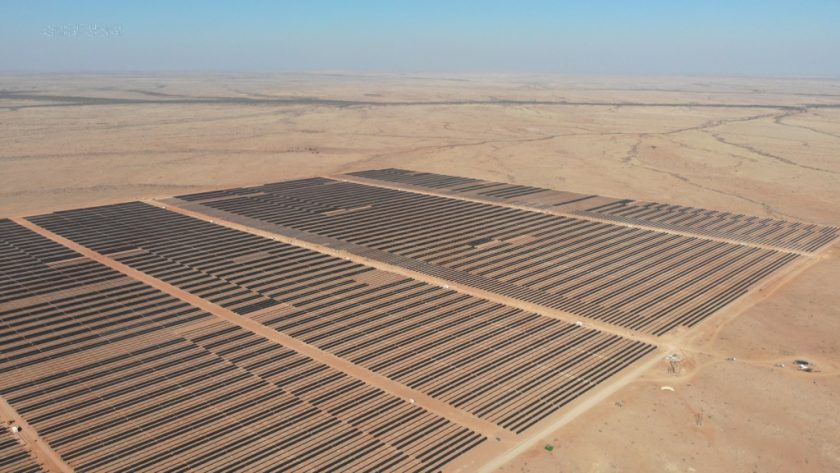
A solar power plant in South Africa, where coal accounts for over 80% of power production, therefore has a greater climate effect than one in Kenya, where 90% of the electricity is renewable.
Through investments in renewable energy under Norfund’s original development mandate, we have over several years documented avoided emissions based on actual production.
These results formed part of the basis for proposing the establishment of the Climate Investment Fund.
Expected avoided emissions
When the fund was established, there was a desire to document the effects of its investments immediately. However, it takes time from when an investment is made until energy production begins.
The fund’s mandate therefore required reporting on “expected (ex ante)” avoided emissions, based on projected production, in addition to avoided emissions based on actual production (“ex post”).
The expected avoided emissions from the Climate Investment Fund have been far higher than estimated when the fund was launched. The target of investing in projects that would avoid 14 million tonnes of CO₂ annually by 2026 was already met in 2023. By 2024, the figure was 17.6 million.
Norfund is now presenting figures for 2025. These show that investments made in that year alone contributed to financing new renewable energy that will avoid 22.7 million tonnes of CO₂ annually.
Total expected avoided emissions therefore exceed 40 million tonnes per year.
Attribution – how much credit can be claimed?
The explanation for the sharp increase is that in 2025 the Climate Investment Fund invested in two companies (Anthem and Mulilo) with ambitious plans to develop a number of power plants in South Africa.
These investments mobilise private capital and make effective contributions to the transition of one of the most coal-dependent countries in the world.
When expected avoided emissions appear very high, it is because they are calculated based on the total expected production from the investments, without considering the share financed by the Climate Investment Fund. In these projects, that share is relatively small.
But couldn’t we calculate the proportion of avoided emissions attributable to the fund? For calculating actual emissions in a portfolio, such a method exists, PCAF, which attributes emissions to each investor.
It is possible to use the same method to calculate avoided emissions. The challenge is that the Climate Investment Fund is intended to trigger investments that would otherwise not be carried out.
This so‑called additionality is not captured by the PCAF method. Here, every dollar, whether the first in equity or the last in a loan, is treated equally, without considering whether it helped mobilise capital from others.
No calculated climate impact from transmission and storage
Avoided emissions from investments in grid infrastructure and storage present another challenge. The need for such investments is enormous: to transport electricity to where demand is located from areas with good solar and wind resources, and to balance the grid when the sun is not shining and the wind is not blowing.
As no good methodology exists for calculating avoided emissions from such investments, Norfund has chosen to count their effect as zero, although this is clearly incorrect.
The figures are only indicators
So what is the climate impact of the Climate Investment Fund? We are transparent about the figures available and how they are calculated. In this year’s annual report, we present data on actual avoided emissions — now significant after four years — alongside figures for expected avoided emissions, as well as attributed figures.
Giving the Climate Investment Fund credit for all expected avoided emissions would be an exaggeration. Relying solely on attributed calculations would correspondingly produce figures that are far too low. The truth lies somewhere in between, with investments in transmission and storage as an unknown wildcard.
In any case, the figures are only indicators for assessing whether the theory of change makes sense. They will never provide an exact truth, and one must avoid purely indicator-driven management. Nevertheless, the indicators are useful.
Together with figures demonstrating strong financial returns, we believe they make it possible to conclude that the Climate Investment Fund avoids substantial emissions, and that the fund — as noted by a parliamentary majority in Norway — “actually earns money per tonne of CO₂ avoided”.
This makes it an exceptionally effective contribution to addressing the climate crisis.