
By: Mohammed A.Abu
Dagbon’s Maiden Convention and Home Coming event has since taken off with debates in Tamale and Yendi that had preceded the official launch in Tamale and now scheduled to be rounded off on December, 27, with a grand durbar in Yendi, the seat of Kingship.
One of the main objectives being to institutionalize yearly convergence of Dagbamba to among other things discuss the development agenda of Dagbon is no doubt going to be one of the major takeaways.
Dagbon,Northern region’s, local economy has been agrarian driven for ages with a greater chunk of production and productivity accounted for, by small holder farmers underpinned by an overtly rain-fed dependent food production system thus, making the need for factoring into the kingdom’s development agenda, commercial irrigation-fed farming non-negotiable.
The need to modernize Dagbon’s agriculture, scale up commercialization efforts and adopt Climate Smart Agriculture (CSA) practices has become more imperative than ever before. So also, is the need to give a spotlight to other less focused and woefully under explored economic sectors, namely tourism, manufacturing, agro-industry, real estate and property development, education and infrastructure among others.
A reinvigoration of Dagbon’s agriculture industry would no doubt go a long way to address the migration of the kingdom’s youth down south looking for menial and imaginary jobs that leaves some entrapped in southern urban slams.
A less publicly talked about issue is Dagbon’s soil nutrient depletion and badly compromised soil health condition exacerbated by decades long over use, misuse and even abuse of agrochemicals in certain cases on the kingdom’s food cultivation landscape. The resultant effects of decades long use of some chemical fertilizers on many farm lands in Dagbon is soil acidification leading to a considerable decline in their farm produce production capacity.
Application of chemical fertilizers without first having carried out soil suitability test to determine quantity, type of fertilizer the soil needs or even don’t need, is a badly scientifically flawed practice the Agriculture Ministry should endeavor to address.
Agriculture’s importance is not about simply being a source of livelihood, but on a more serious note, it is a science and a business and must be treated as such in Dagbon within the context of its development agenda. In our Ghanaian context, agriculture needs re-imaging badly. That is granted the misleading populist view that tends to generally perceive agriculture as a job for school drop outs. The emerging youthful agripreneurs success stories in the Eastern Africa region should inspire Dagbon’s youth.
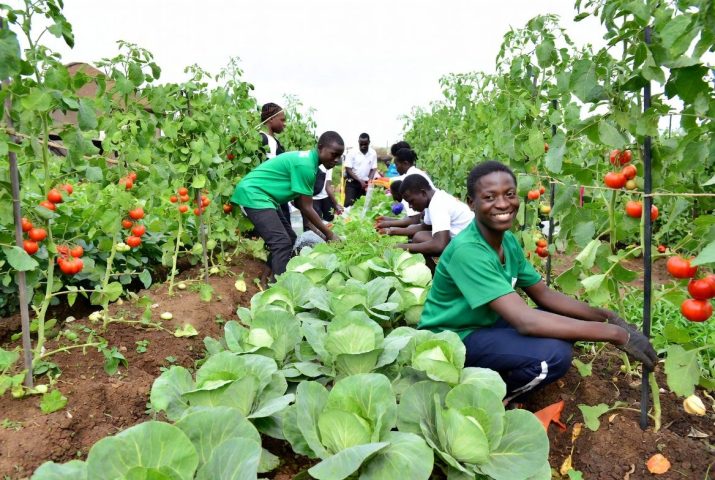
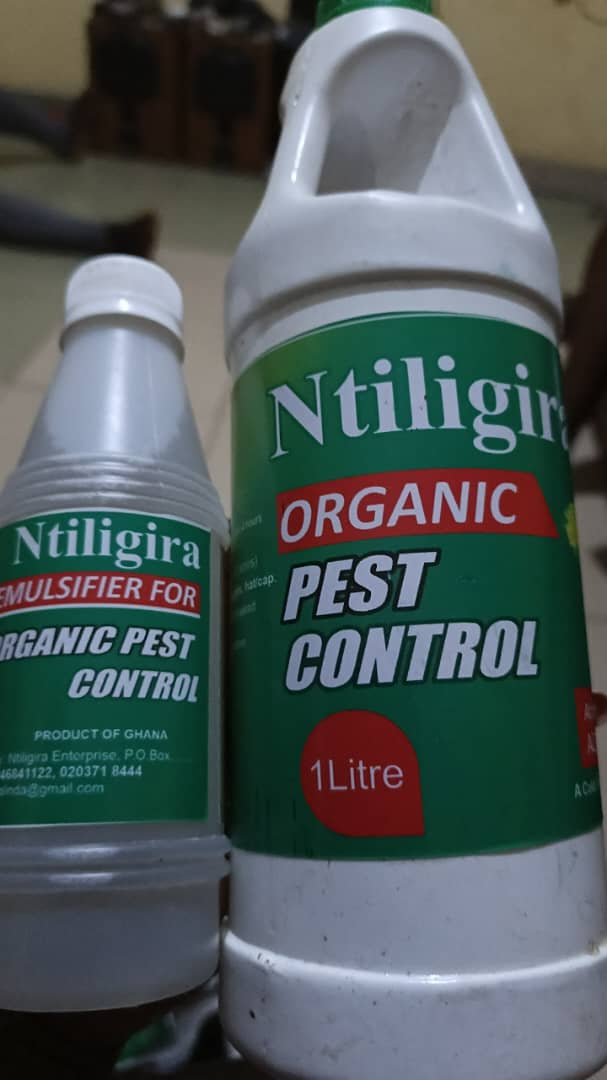
Local enterprises have since ventured into agro inputs production in Dagbon leveraging its abundant agriculture waste endowment for compost and neem cake for organic fertilizer production in order to address the restoration of soil fertility including production of organic pesticides from neem oil for pest control in order to scale up Dagbon’s emerging organic farming paradigm. For industry insights, your favourite, Eco-Enviro News, Africa magazine caught up with Linda Issaka Akeyate, Managing Director, Ntiligira Enterprise in an interview.

Neem Cake Organic Fertilizer
Que 1. : Kindly tell us about your self and what you do at Ntiligira Enterprise
Ans; I am Issaka Linda Akeyate, the MD of Ntiligira Enterprise. At Ntiligira Enterprise, we produce Compost, Neem Oil and Neem Cake. We also provide training to NGOs, farmers and vegetable producers on the preparation of our products and their usage.
Que.2. For how long has Ntiligira Enterprise been engaged in the production of compost, Neem oil and neem cake agro inputs?
Ans; Ntiligira Enterprise commenced production in 2010 operating under Green Gro Limited originally. It however emerged as an independent entity in 2020. It has therefore since been in operation.
Que 3. What has been the motivating factor behind your company’s product lines?
Ans: To clean the environment by making use of natural waste which is human and environmentally friendly.
Que 4: What has the market demand for your products been like so far?
Ans: It is average but strategies such us getting in touch with NGOs, farmers and vegetable producers are being contacted and awareness created.
Que 5: What were the early-stage challenges if any you may want to recount?
Ans: As financial resource is key to every business and without it which no business thrives, Ntiligira Enterprise was of no exception. Again, materials which people found it difficult to dispose of as a result of where to dispose had to be bought when contacted.
Que 6: What success stories or case studies do you have to share about your compost and neem products in terms of agricultural pest control, soil microbial activity and health improvement and nematodes reduction and for that matter yields enhancement?
Ans: Costumers who have used our products have testified to their efficacies.
Que: 7.Aside the neem cake and compost there are other plants like azolla species and tress like the yellow pod acacia tree used to restore and enhance soil fertility naturally. Is your company also considering those additional alternative options as well?
Ans; Ntiligira Enterprise will surely to go on to improving the quality and efficacy of its inputs in order to make it compete well other organizations that are into similar inputs production when the demand for its products expands.
Que 8: Soil acidification is currently a serious problem affecting sizable chunks of arable lands across the Northern region for which decades long chemical fertilizers misapplication and over application is said to be the cause. What plans does your company also have regarding that if you aren’t already offering any natural alternative solutions to that?
Ans: Ntiligira Enterprise is already into awareness creation as far as education on the need for the use of organic inputs visa vis that of chemical fertilizers. We are in touch with farmers and NGOs day-in day-out. As the MD of the Ntiligira Enterprise, I am on whasapp platforms of various vegetable producers where the importance of the use of organic farm inputs is echoed.
Que:9. Chemical weedicides are also said to badly impact beneficial soil micro-organisms survival. Do you have plans for organic weedicides if you aren’t already offering that alternative?
Ans: We intend venturing into providing organic weedicide in the near future when demand for our products improves.
Que 10.: What is your corporate vision for impacting organic farming in Dagbon, Northern Region in the next five-ten years?
Ans; Our vision is to be a leading provider of sustainable agricultural solutions, contributing to food security and environmental conservation in the northern region of Ghana and beyond in the next five to ten years.