


…………..As SEC and NIC set to Publish Sukuk and Takaful Guidelines
Report: Mohammed A. Abu
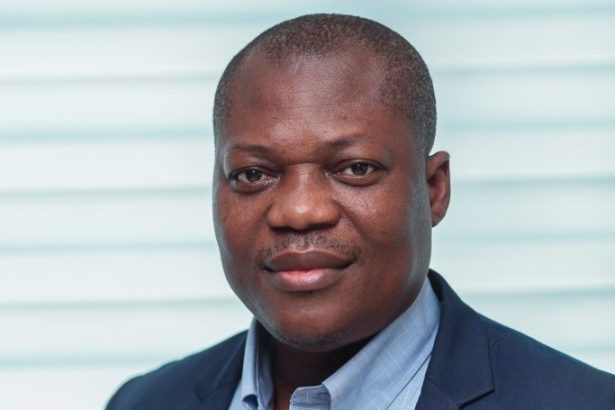
The Special Advisor to the Governor of Bank of Ghana on Non-Interest Banking and finance Prof John Gartchie Gatsi,has advised potential local and foreign parties interested in rendering services relating to sukuk (non-interest bond) and Takaful (non-interest insurance) to rather consider engaging directly the Securities Exchange Commission(SEC) and the National Insurance Commission(NIC) and not the Bank of Ghana.
The two institutions, he said, have the regulatory oversight responsibility over sukuk (Non-Interest Bonds) and Takaful (Non-Interest Insurance) respectively and not the Bank of Ghana (BOG). Those interested in sukuk under writing he said, should therefore contacting directly SEC as Sukuk is a Capital Market product.
After the sukuk Guidelines are issued, he said, Non-Interest Banking and finance Consultancies may contact government through the Ministry of Finance to explore Sovereign Sukuk issuance opportunity and regarding which they could offer their services.
The banks he added, could also be contacted by non-interest finance consultancies regarding their non-interest banking related services that are of relevance and importance to their effective operations.
Prof Gasti was speaking during an exclusive, with your favourite, Eco-Enviro News Africa, in Accra, Monday.
BOG in charge of regulating and supervising the operations of non-interest banking institutions had earlier this year issued its Guidelines for the Regulation and Supervision of Non-Interest Banking, 2025.
Sukuk and Takaful Guidelines in the Pipeline
Prof Agatsi also disclosed that SEC and NIC have gone very far regarding sukuk and Takaful Guidelines expected to be out, between March-April, 2026.
Effective Institutional Stakeholder Coordination
BOG, Prof Gasti said, from the word go, had ensured effective coordination among the relevant institutional stakeholders and had thus, carried along, the two institutions. Capacity building for the institutional stakeholders, he said is on-going and also entails visits to Malaysia, Nigeria among others, in order to draw useful lessons.
Ghana he disclosed had since secured membership of the Malaysia based Islamic Financial Services Board (IFSB) and which gives Ghana leverage.
The IFSB is an international organization committed to promoting the soundness and stability of the Islamic financial services industry (IFSI) by developing international standards for the regulation and supervision of the IFSI, supporting the adoption and consistent implementation of standards and sound industry development through capacity building and technical assistance, and monitoring financial stability and identifying current and emerging risks to the Islamic Financial Services Industry( IFSI)
The non-Interest finance Industry( Islamic finance)entails, Banking, Takaful (Insurance),Microfinance, Islamic capital market products with particular reference to sukuk, Fund Management,Ijara(Lease),Real Estate finance, social finance tools namely,waqf(endowments),Zakat(compulsory Tax for the poor),Sadaqa(Charitable donations) and Halal Business(ethically driven production of food products,cosmetics,pharmaceuticals,etc).They are sub-sets of the Islamic economy system.
Islamic economics otherwise described by some as “Share Economics” is underpinned by the philosophy that God is the sole Originator and Owner of all resources in the earth’s marine, aquatic and terrestrial ecosystem which are provisions made for the survival and existence of humanity who are Trustees for that matter.
Islamic Finance Philosophy
Therefore every human generation, acting as Trustees, collectively have the responsibility to manage the resources most responsibly and prudently so as to ensure their sustainability to serve their existence on planet earth in a most befitting manner and to bequeath that as their legacy to yet unborn generations.
No wonder the United Nations Development Programme (UNDP) has since considered it prudent partnering the Jeddah, Saudi Arabia based Islamic Development Bank (IsDB) to organize courses in Islamic Finance and the UN Sustainable Development Goals(UN SDGS).