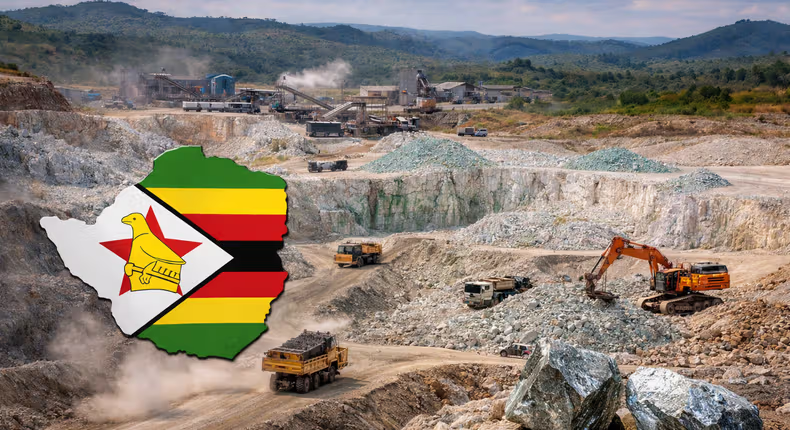

Zimbabwe turns to its precious metals and critical minerals to shield itself from the US war

Chinedu Okafor,Africa Business Insider First Published 15 June 2026 02:00 PM. Zimbabwe intends to leverage its projected mineral export revenue, estimated at $6.5-$7 billion for the current fiscal period, as a strategic buffer against economic instability stemming from geopolitical tensions between the United States and Iran. Zimbabwe plans to use its projected $6.5-$7 billion mineral export revenue as a buffer against economic instability due to US-Iran geopolitical tensions. Rising global gold prices, improved platinum group metals outlook, and increased lithium exploitation are expected to boost fiscal performance. Mining is a crucial…

Africa’s Business Heroes Unveils 2026 Top 100 Entrepreneurs

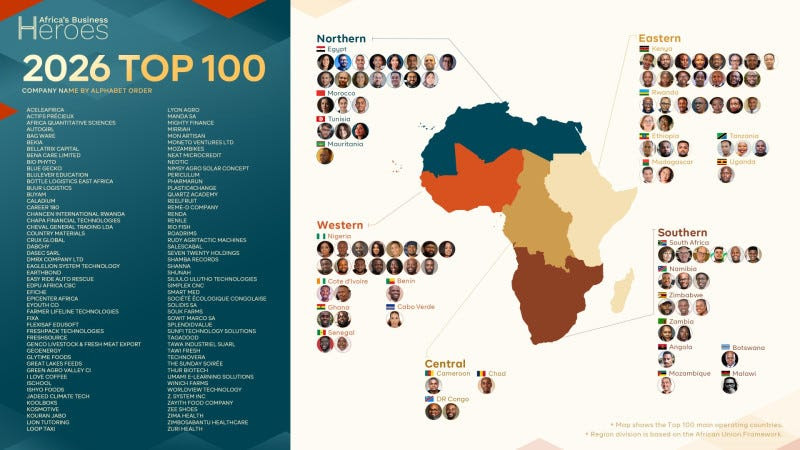
Africa’s Business Heroes (ABH), the flagship philanthropic initiative of the Jack Ma Foundation and Alibaba Philanthropy, has unveiled its 2026 Top 100 entrepreneurs, selected from more than 24,000 applications from all 54 African countries according to an official statement. For the first time in ABH’s history,the statement disclosed, the competition has expanded its first round of finalists from a Top 50 to a Top 100 cohort, creating more visibility and opportunity for entrepreneurs across regions, sectors, and business models. The expansion,it noted, reflects the growing depth, competitiveness, and commercial maturity…

The Hidden Lifeline On a Side of Every Country Road

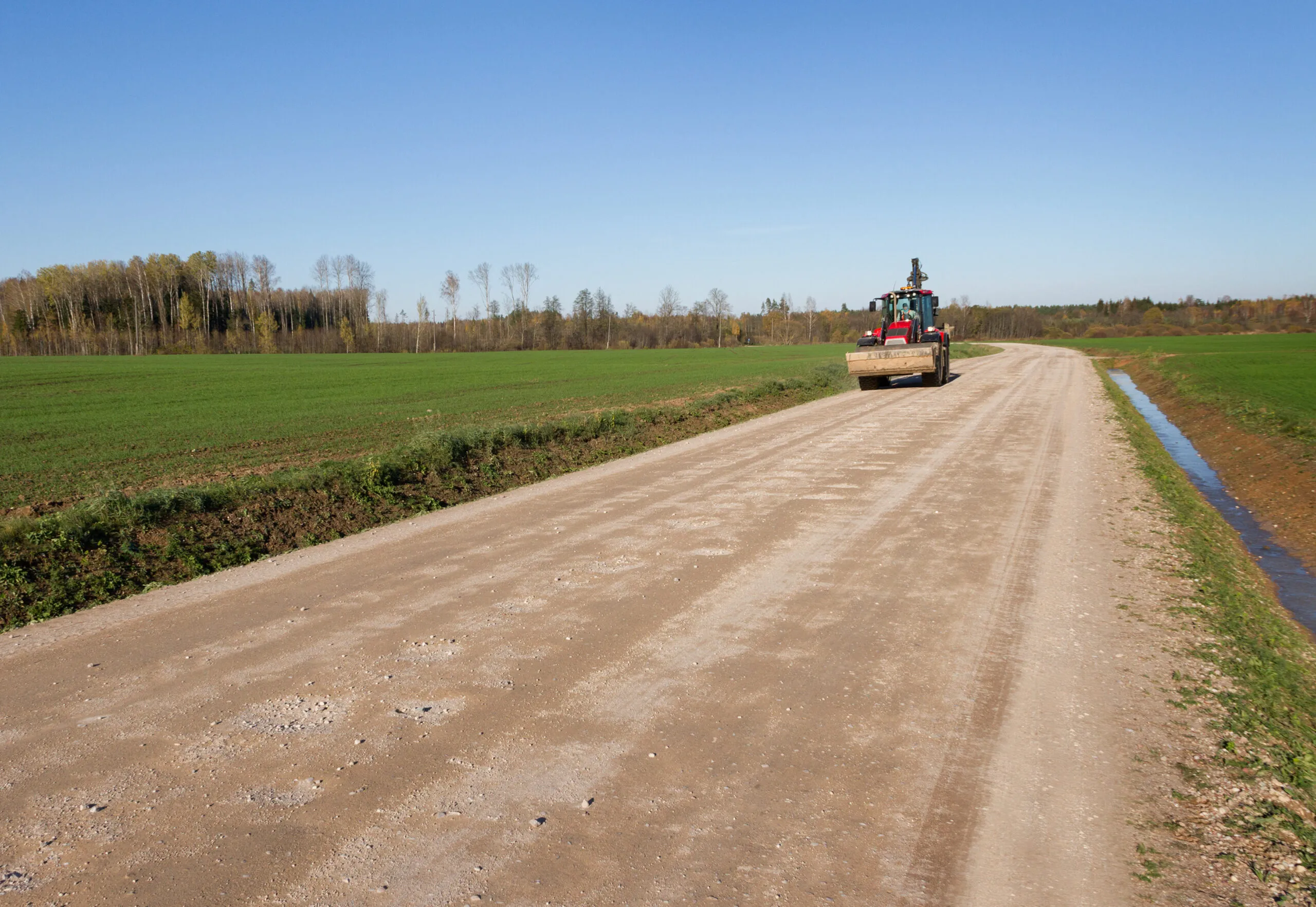
EcoRoads Article,first Published,June 9,2026 Why proper roadside drainage is the unsung foundation of safe, durable rural infrastructure , and what happens when it fails. Water: The Road’s Quiet Adversary Drive along any well-maintained rural road and you might not think twice about the shallow ditches lining each side, the gentle crowning of the pavement, or the culverts hidden beneath at every low point. Yet these unassuming features are working constantly — diverting, channeling, and dispersing the single greatest enemy of rural infrastructure: water. In urban settings, extensive storm sewer networks…

Climate Change Impact in Dagbon: The Shea Factor

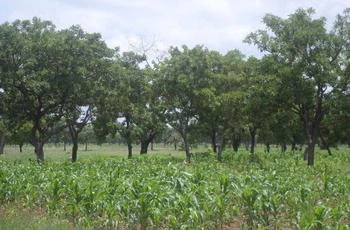
By: Mohammed A. Abu Introduction Climate change refers to long-term shift in the Earth’s average temperatures and weather patterns. While the Earth’s climate has changed naturally throughout history, the current, rapid warming is primarily driven by human activities with fossil fuels said to be the worst offender which releases heat-trapping greenhouse gases into the atmosphere. Climate change has since impacted sources of livelihood of many in Dagbon and the wider Northern Savannah Zone (NSZ) making climate action mitigation and adaptation strategies non-negotiable. Climate change impact researchers have since unearthed how…

AI and journalism in southern Africa: editors are using it but balanced with human expertise and editorial judgement

First Published,June 1,2026.Authors: Mandla J. Radebe,Professor, University of Johannesburg,Mandla J. Radebe Professor, University of Johannesburg Mbongeni J Msimanga Post-doctoral fellow at the Johannesburg Institute for Advanced Study, University of Johannesburg Artificial intelligence (AI) is becoming part of everyday newsroom work across Africa. It has entered quietly through routine tasks such as transcription, headline writing, translation and content preparation. In southern Africa, where AI adoption is steadily growing, its application in journalism is raising critical questions from policymakers and governments. While technology offers gains in speed and efficiency, its use remains contested due…

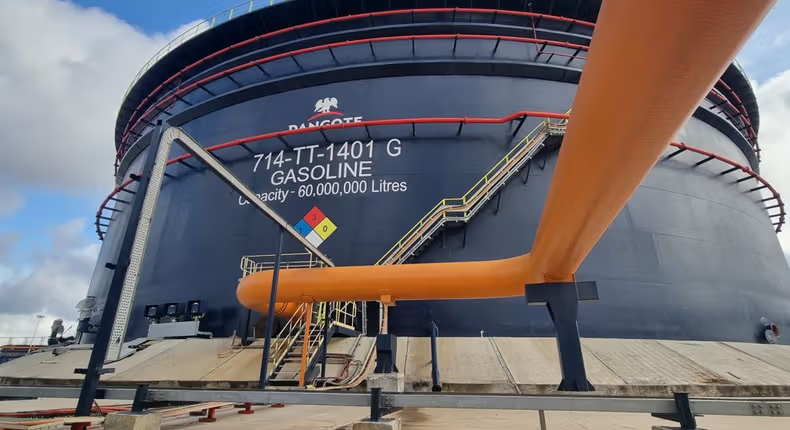
How Dangote plans to transform Nigeria from an oil exporter into a global fuel powerhouse

For decades, Nigeria exported crude oil, imported fuel and watched global refining hubs capture much of the value in between. Now, Africa’s richest industrialist wants to change that. Dangote Refinery plans to expand its crude processing flexibility from about 40 grades to as many as 130. The move forms part of a broader strategy to transform the Lagos facility into a global refining, trading and export hub. The refinery is preparing to more than double capacity to 1.4 million barrels per day while increasing imports of crude from international markets.…

Coconut Shells and Africa’s Built Environment: A Circular Economy Pespective

Introduction Coconuts constitute one of Ghana’s coastal zones invaluable natural resource endowments and its full economic potential has for decades been begging for being unlocked while the country’s East Asian compatriots have since been up to their game in that respect. For decades coconut has been generally treated and still continues to treated in Ghana by many simply as a natural goodie on break open the shell- enjoy the refreshing water-albumen-throw away the husk and shell away as waste supposedly and without appreciating them as potential vital raw materials for…

Feature: Now, Let’s Build a Sky Train for Accra-(By Dr Joseph K. Ofori-Kuragu)

Ghana’s infrastructure drive has gathered real momentum in recent years. Large national projects continue to shape public discussion, especially after the presentation of the 2026 Budget by the Minister of Finance. One of the most debated proposals is the Accra–Kumasi Expressway. The reactions have been mixed, but what is clear is that Ghanaians are thinking seriously about how the country should grow and how mobility can support that growth. The level of engagement shows that the public is ready for solutions that make life easier and expand economic opportunities. At…

Strokes are on the rise in Africa: why the continent needs its own care guidelines

First published November 11,2025,The Conversation Nicholas Aderinto, MD,PhD Student/Graduate Teaching Assistant, University of Utah A stroke is a medical emergency that happens when something prevents the brain from getting enough blood flow. Stroke is now one of the leading causes of death and disability in Africa. Current estimates indicate rates of incidence (new cases) as high as 316 per 100,000 people annually and prevalence (existing cases) of 1,460 per 100,000 – among the highest globally. Yet, most nations lack locally adapted stroke management guidelines. This is unlike high-income countries, which regularly update their national stroke…

Africa’s Infrastructure Funding Deficit: The Role of Gold Monetization

Introduction African governments are confronted with an annual multi-billion-dollar infrastructure funding deficit that cost the continent a 2% annual reduction in its GDP growth. Adopting innovative financing solutions through domestic resource mobilization and governance reforms is therefore critical for governments balancing competing budget lines. The African Development Bank (AfDB) estimates that Africa needs $130–$170 billion annually for a robust infrastructure development. Thus, Africa faces a significant annual infrastructure funding deficit, with estimates ranging from approximately $68 billion to over $100 billion annually, This gap, it is said, stems from factors like…