
….As Nigeria goes to the Polls early next Year
Moment for Women Alliance Calls for Safer Politics and Stronger Support for Women Ahead of Nigeria’s 2027 Elections.Let Women Vote Nigeria 2027 webinar highlights protection, resources and institutional accountability as essential to women’s political leadership.
Moment for Women Alliance, a women-led non-governmental organisation, has called on political parties, public institutions, civil society organisations, the media and community leaders to strengthen protection for women in politics and turn commitments to inclusion into practical, measurable action according to an official statement issued in Ogun State,Teusday.
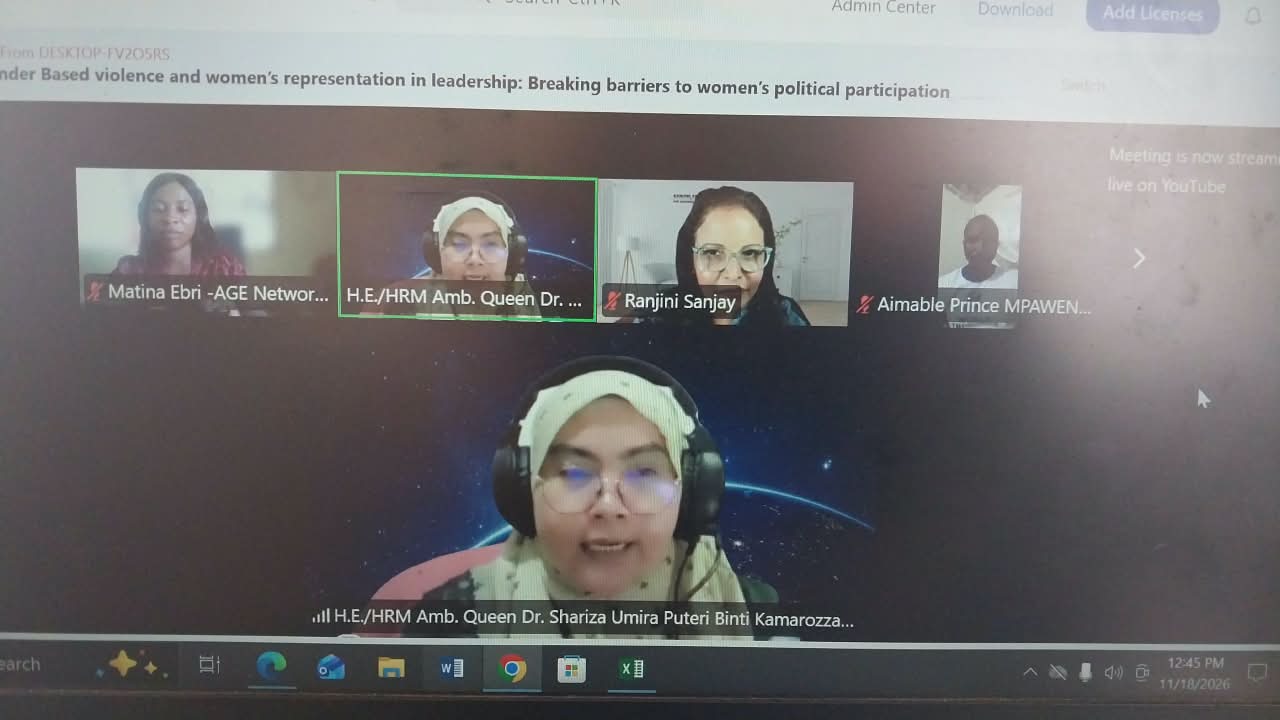
The call follows its webinar held on 18 November 2026, themed “Gender-Based Violence and Women’s Representation in Leadership: Breaking Barriers to Women’s Political Participation.” Organised under the Let Women Vote Nigeria 2027 Campaign, the dialogue brought together contributors from Nigeria, Kenya, Tanzania, India and the United States.
Esther Asuquo, Coordinator of Moment for Women Alliance and Convener of the campaign, said the webinar reinforced the need to address gender-based violence as a barrier to women’s political participation.
“Women need safety, resources and fair opportunities to lead. Through Let Women Vote Nigeria 2027, we are calling for stronger institutional protection and collective action so that no woman has to choose between her safety and her right to participate,” she said.
Speakers emphasised that women’s participation must extend beyond voting to include meaningful influence over policies, resources and decisions. They examined how violence, intimidation, financial exclusion, discriminatory practices and unequal media coverage restrict women’s opportunities to lead.
Brenda Anugwom, Chief Executive Officer of the Nigerian Women Trust Fund, warned that violence and inadequate accountability discourage women from entering or remaining in politics. She called for stronger institutions, timely responses to attacks and consequences for perpetrators.
Hon. Comrade Fred Enaikhe Aleburu, President of the Owan General Assembly of Nigeria, urged male allies to translate support into concrete action within political parties and communities. He advocated transparent nomination processes, equitable campaign resources, sponsorship of women aspirants and effective responses to intimidation.
Roseline Aigbokhan, a leadership coach and mental health professional, called on civil society organisations to strengthen women’s political influence through grassroots civic education, leadership development and coordinated advocacy. She also highlighted economic dependence, emotional distress and unsafe environments as barriers requiring attention.
Speaking from Tanzania, Gesonko Paul, a public health professional and gender equality advocate, emphasised mentorship, practical preparation and protection for young women throughout the electoral cycle. He stressed that electoral defeat should not diminish a woman’s dignity or end her leadership journey.
Contributions from Kenya focused on sustained preparation, campaign financing and institutional support.
Sarah Muhoya of Echo Network Africa Foundation called for stronger national and regional collaboration, knowledge sharing and accountability. She highlighted the importance of supporting women between elections through training, resource mobilisation and professional campaign preparation, alongside collective action against sexual and gender-based violence.
Juliana Kiio, Executive Director of Democracy Trust Fund, Kenya, outlined an approach combining leadership development, progressive campaign savings, partnerships and guidance on accessing institutional support. She encouraged sustainable financing throughout the electoral cycle, noting that practical assistance can also include campaign materials, volunteers and agents.
Bem Aga of the National Democratic Institute connected women’s inclusion in governance with conflict prevention and resolution. He recommended sustained civic education, gender-responsive budgeting, legal and administrative reforms, and greater opportunities for women in elected and appointed positions. He also emphasised implementation and changes in attitudes that exclude women from decision-making.
Addressing media representation, Ranjini Sanjay called for coverage that assesses women leaders through their policies, experience, decisions and results. She challenged reporting centred on appearance, family circumstances and gender stereotypes, urging fair visibility and responsible reporting of abuse.
Padma Kumaran, a career coach and author, described violence against women in politics as a democratic concern. She called on governments, political parties, communities and male allies to create conditions in which women can lead without fear.
Pravallika GSL, a communication and confidence-building coach, emphasised that women’s voices must be respected and reflected in decisions. She advocated safe spaces for self-expression, leadership training, financial independence and responsible media engagement.
Cary Goulston, an international educator and humanitarian, highlighted human rights education, life skills and community leadership training as tools for addressing violence. He expressed willingness to share educational resources and training opportunities with interested organisations.
The webinar was moderated by H.E./HRM Amb. Queen Dr. Shariza Umira Puteri Binti Kamarozzaman, alongside Matina Ebri of AGE Network. Closing reflections emphasised political safety, meaningful representation, institutional accountability, economic empowerment and digital protection.
The discussions identified priorities for continued engagement: stronger responses to political violence, fairer nomination processes, accessible civic education, sustained financing and mentorship, responsible media coverage and cooperation across organisations and countries.
Asuquo thanked the speakers, moderators and participants and reaffirmed the Alliance’s commitment to sustaining advocacy and collaboration that support women’s safe and meaningful participation ahead of Nigeria’s 2027 General Elections.
Her Vote. Her Voice. Her Power. Our Future.
More Women. Stronger Democracy.
Media enquiries:
Esther Asuquo
Coordinator, Moment for Women Alliance
Email: momentforwomen@gmail.com
WhatsApp: +234 811 304 1679
Social media: @moment4women
SOURCE
Moment for Women Alliance
Post Views: 5