

Author: Hariharan Sundararajan
Chairman, Federation of Asian African Trade Development & Investments (FAATDI)
Founder & Strategic Visionary, Bharat Strategic Apex Institute (BSAI)
Founder & Managing Director, Aurum Elite Bullion LLC & AuroChain
A Perspective on Strategic Commodities, Financial Architecture, Trade, Technology, and Sustainable Development
The global economy is undergoing a permanent structural realignment, shifting decisively from open-ended globalization to fragmented, hyper-localized geoeconomics.
As traditional supply chains fracture and multilateral systems struggle under the weight of great-power rivalries, the Global South can no longer rely on legacy external frameworks to guarantee its developmental future. Instead, institutional builders must step forward to construct self-sustaining, resilient ecosystems of commerce, finance, and resource governance.
The convergence of India and Africa represents the most significant economic opportunity of the current decade. With India’s economy scaling past $4 trillion and Africa rapidly activating the African Continental Free Trade Area (AfCFTA)—now a ratified, single market spanning 50 nations, 1.3 billion people, and a combined GDP of $3.4 trillion—the dynamics of South–South cooperation must fundamentally evolve. Political solidarity, while historically foundational, is no longer sufficient.
The sudden, necessary deferral of the Fourth India-Africa Forum Summit (IAFS IV) in New Delhi—postponed via joint consultation between the Government of India and the African Union amid emerging public health risks—does not halt the momentum of South–South integration.
Rather, it serves as a stark geo-economic reminder: the Global South can no longer rely on sporadic, high-profile diplomatic gatherings to drive its development. Instead, this operational pause underscores the urgent need for a continuous, institutional strategy that moves beyond scattered bilateral ties.
The current landscape demands a pragmatic blueprint built on shared institutional thinking, cross-border digital public infrastructure (DPI), and localized value-chain transformation that can function independently of global disruptions.
By shifting from a traditional buyer-seller dynamic into a decentralized, resilient framework of co-ownership and technology transfer, an India–Africa alliance can establish a permanent benchmark for sustainable, equitable development.
Section I: Africa’s Rise in the New Global Economy
Africa’s economic trajectory is no longer defined by marginal, extractive growth; it is the cornerstone of future global industrial expansion. This shift is driven by an unprecedented combination of demographic momentum, urban expansion, and structural trade integration. By the middle of this century, one in four people on Earth will be African, representing the world’s largest, youngest, and most digitally native workforce.
This demographic dividend is unfolding alongside rapid urbanization, creating vast consumer markets and dynamic industrial hubs across the continent.
| THE AfCFTA INTEGRATION LANDSCAPE (2026) | |
| Ratified Sovereignties: 50 Nations actively implementing common tariff lines. |
Combined Economic Value: Unified market of $3.4 Trillion with 1.3 Billion consumers. |
| Operational Milestones: Rules of Origin finalized; deployment of Digital Electronic Certificates. |
Growth Projections: Intra-African trade projected to increase by +$22 Billion/year by 2029. |
As articulated at the Biashara Afrika 2026 summit in Lomé, the conversation has officially shifted from framework negotiations to field-level execution. The operationalization of the AfCFTA is actively dismantling fragmented regulatory landscapes to build an integrated industrial platform.
Rather than acting as a passive supplier of primary inputs to external manufacturing hubs, African nations are utilizing Regional Value Chains (RVCs) to process, manufacture, and export finished goods domestically.
Realizing this potential requires a coordinated departure from legacy models. Infrastructure development must move beyond historical corridor extraction and focus on building multimodal logistical networks that connect landlocked production centers to regional ports.
Crucially, the agreement’s historic Protocol on Women and Youth in Trade acknowledges that small and medium-sized enterprises (SMEs) make up more than 98% of the market players across the continent. Africa’s abundant renewable energy potential—spanning solar, wind, and green hydrogen—provides an opportunity to power these businesses via a low-carbon industrial base.
Supported by digital transformation, simplified cross-border customs, and unified regulatory standards, Africa is positioning itself as a primary center for global industrial production, technology adoption, and localized wealth creation.
Section II: The Evolving Global Financial Architecture
The global financial architecture is experiencing a period of systemic change. Developing nations remain disproportionately exposed to interest rate volatility, biased credit rating methodologies, and an annual trade finance gap in Africa that reaches nearly $100 billion. In response, the Global South is building an alternative, multipolar financial ecosystem.
This new architecture prioritizes financial sovereignty, localized liquidity, and innovative funding mechanisms designed to insulate emerging economies from external shocks.
South–South finance is no longer a theoretical concept; it is being implemented through practical mechanisms:
- Alternative Payment Systems: The expansion of Local Currency Settlement Mechanisms (LCSM) reduces dependence on third-party reserve currencies, lowering transaction costs and preserving foreign exchange reserves.
- Blended and Sovereign Financing: Development Finance Institutions (DFIs) across Asia and Africa are combining public concessional capital with private commercial investment to de-risk large infrastructure projects.
- Green and ESG Financial Products: Capital allocation is shifting toward sustainability, using innovative instruments like green bonds and sustainability-linked loans to fund climate adaptation without increasing sovereign debt burdens.
India’s deployment of Digital Public Infrastructure (DPI) offers a valuable, field-tested model for this financial evolution. The Unified Payments Interface (UPI) and a robust fintech ecosystem have transformed financial inclusion, turning basic digital connectivity into an economic driver. Adapting these open-source, scalable digital rails to African markets can help bypass legacy banking limitations. Integrating cross-border digital payment networks with the Pan-African Payment and Settlement System (PAPSS) will help address the continent’s trade finance gap, reduce settlement times from days to seconds, and provide small traders and youth-led enterprises with direct access to international trade liquidity.
Section III: Climate, Geopolitics, and Strategic Commodities
Geopolitical tensions and export controls have turned the acquisition of strategic commodities into a central focus of national security and industrial policy. At the same time, the global transition toward clean energy has created significant demand for critical minerals, rare earth elements, copper, lithium, cobalt, and graphite. Because Africa holds a major share of these global reserves, it finds itself at the center of a complex geopolitical landscape.
Historically, this resource wealth left the continent as raw ore, leaving African economies vulnerable to volatile global commodity cycles while shifting processing profits downstream. In the current geoeconomic environment, African nations are prioritizing resource governance, local value addition, and domestic mineral beneficiation. The goal is clear: primary resources must be processed where they are extracted, transforming raw minerals into high-value components, refined alloys, and finished industrial products before export.
| “Primary resources must be processed where they are extracted, transforming raw minerals into high-value components, refined alloys, and finished industrial products before export. This is the ultimate benchmark of economic sovereignty.” |
Consider the institutional gold market as a clear case study for this broader structural shift. For too long, the gold trade in parts of the Global South was fragmented, subject to opaque supply chains, and lacking in standardized local refining infrastructure. Transforming this sector requires the same blueprint needed for critical minerals:
- Responsible Sourcing & Technical Capacity: Establishing regional refining and processing centers that meet international standards, ensuring that wealth remains within the source nation.
- Digital Traceability: Deploying secure cryptographic ledgers and immutable tracking mechanisms (such as the AuroChain digital protocol) to map the journey of a commodity from the mine to the global market. This provides verifiable proof of ethical sourcing, transparency, and regulatory compliance.
- ESG Integration: Aligning resource extraction with strict environmental stewardship and community reinvestment standards, making sustainability a core competitive advantage rather than a regulatory burden.
By applying this structured model to both precious metals and critical industrial minerals, India and Africa can establish transparent, secure supply corridors. This approach protects local resource governance, ensures fair market pricing, and builds resilient supply chains independent of traditional monopolies.
Section IV: India–Africa: A Strategic Partnership Beyond Trade
Bilateral economic relations between India and Africa have reached significant milestones, with total trade volume expanding past $89–$93 billion. However, maintaining a simple buyer-seller dynamic is insufficient for long-term economic resilience. Currently, India’s trade with Africa is roughly one-third of China’s $348 billion footprint, and Indian outward foreign direct investment (OFDI) has experienced sharp fluctuations.
If the relationship remains focused purely on the exchange of raw materials for finished goods, it risks repeating old economic imbalances. The current global landscape requires an evolution toward an integrated, capability-building strategic partnership.
This structural shift relies on building shared industrial corridors and co-owned manufacturing ecosystems. Indian expertise in pharmaceuticals, automotive assembly, information technology, and specialized manufacturing can align with African industrial strategies. Rather than exporting finished products, Indian enterprises must focus on establishing local joint ventures and manufacturing plants within newly designated AfCFTA Special Economic Zones.
This approach creates regional employment, drives domestic industrialization, and positions Africa as an exporter of high-value goods.
Beyond physical manufacturing, this partnership can expand into several strategic areas:
Defense-Industrial Cooperation & Maritime Security: Collaborative efforts should focus on co-producing defense equipment, sharing maritime domain awareness, and securing trade lanes across the western Indian Ocean to protect vital commercial corridors.
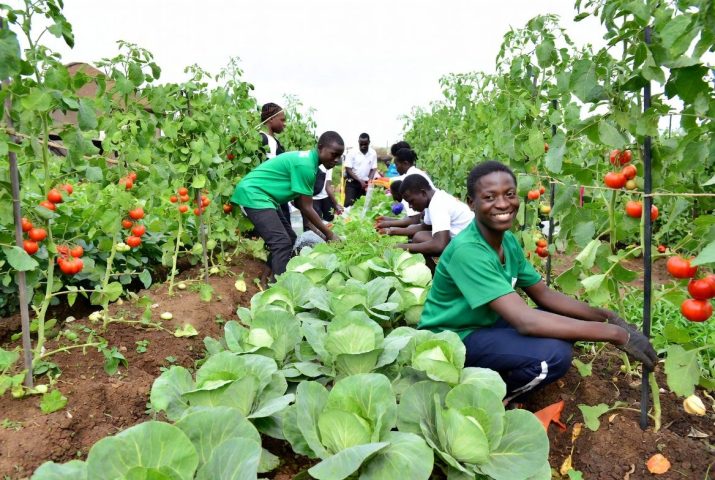
Agricultural and Food Systems: Recent World Economic Forum studies show that tracking and optimizing agricultural logistics (like mango purée or grains) across African borders reduces trade costs dramatically. Collaborative projects can introduce climate-resilient agribusiness models, local food processing facilities, and joint ventures in fertilizer production to improve regional food security.
Knowledge and Startup Ecosystems: Institutional frameworks can link technology incubators and startup hubs in India and Africa. This facilitates the transfer of intellectual property, fosters software co-development, and helps cultivate young entrepreneurial talent.
By prioritizing collaborative capacity-building over economic dependence, India positions itself as a dependable partner for development, working toward an institutional goal of transforming bilateral trade through sustainable, structured cooperation.
Section V: Innovation, Technology, and the Future of South–South Cooperation
Modern technology offers an opportunity to redesign economic systems, allowing the Global South to deploy modern digital frameworks without relying on legacy infrastructure. In an era shaped by automation, artificial intelligence, and distributed ledgers, technology transfer is no longer just an administrative objective—it is a core economic requirement. Implementing open-source digital infrastructure allows developing nations to quickly improve market transparency, supply chain efficiency, and cross-border trade systems.
Several key technologies are driving this transformation across cross-border value chains:
- Artificial Intelligence and Smart Logistics: Deploying predictive analytics and AI-driven systems to optimize shipping routes, manage port congestion, and forecast demand patterns across the AfCFTA corridor, minimizing transactional delays.
- Blockchain and Electronic Certifications: Implementing decentralized ledgers to secure supply chain documentation. The recent adoption of the AfCFTA Electronic Certificate of Origin proves that digital trade protocols can automate customs compliance through self-executing smart contracts, significantly reducing border delays.
- Precision Agriculture and Climate Tech: Integrating satellite imagery, IoT sensors, and data analytics into farming practices to improve crop yields, optimize resource use, and build resilience against changing weather patterns.
- Circular Economy and Renewable Energy Grids: Sharing technical expertise in decentralized renewable energy systems, battery storage networks, and smart mini-grids to supply reliable power to remote industrial operations.
When these technologies are integrated into public infrastructure, they reduce structural friction and lower the costs of doing business. Embracing shared innovation allows India and Africa to build transparent, auditable, and highly competitive value chains capable of meeting rigorous global regulatory and environmental standards.
Section VI: Institutional Partnerships for Sustainable Development
Executing a comprehensive geoeconomic strategy requires a unified network of aligned institutions. A strategy paper cannot rely solely on market forces to build resilient economic corridors.
It requires deliberate collaboration across governments, multilateral institutions, academic centers, and private sector leaders. Sustainable growth depends on establishing permanent institutional platforms that outlast short-term market fluctuations or political cycles.
The private sector, supported by trade chambers and industrial associations, must lead this engagement by identifying and resolving operational bottlenecks on the ground.
Simultaneously, development banks and multilateral institutions must provide targeted trade credit, sovereign guarantees, and project financing tailored to the needs of South–South industrial projects, optimizing the over $12 billion in Lines of Credit extended by India to its African partners.
Equally critical is the role of universities and research institutes in creating dedicated knowledge-exchange frameworks. By establishing joint research hubs focused on critical minerals, material sciences, renewable energy, and public policy, our institutions can train the next generation of engineers, policymakers, and business leaders.
This ensures that the technical, managerial, and operational expertise required to run these integrated economies is developed directly within our societies.
Conclusion: A Shared Future Built on Partnership
The next chapter of South–South cooperation will not be measured simply by the volume of raw commodities traded, but by the depth of our institutions, the resilience of our value chains, and the sustainability of our industrial models.
The global economic shift away from unipolar systems presents India and Africa with a distinct opportunity to build a new framework for development—one rooted in mutual respect, shared capabilities, and tangible economic growth. By aligning strategy with operational discipline, this partnership can build an enduring ecosystem for global prosperity.
The 10-Point India–Africa Strategic Partnership Agenda
- Resilient Commodity Value Chains: Build secure, direct trade pathways for precious metals and critical industrial minerals to reduce exposure to intermediary market disruptions.
- Responsible Mineral Governance: Implement unified ESG and transparency standards to ensure resource extraction supports local community development and ecological balance.
- Local Industrialization: Accelerate the transition from raw material exports to domestic processing and manufacturing within African industrial corridors.
- Digital Public Infrastructure: Deploy open-source digital public infrastructure to expand financial inclusion, digital identities, and accessible public services for small traders.
- AI-Enabled Smart Logistics: Build transparent, AI-driven trade and customs systems to reduce cross-border transit times and logistical friction.
- Joint R&D and Technology Transfer: Establish collaborative scientific research platforms to co-develop intellectual property and transition manufacturing technologies.
- Strategic Investment Corridors: Direct structured private and sovereign capital into vital infrastructure, connecting regional production hubs to global markets.
- Skills and Entrepreneurship Initiatives: Invest in technical education, vocational training, and youth leadership programs to support an expanding industrial workforce.
- Climate-Resilient Financing: Create innovative blended finance structures and green investment instruments to fund critical climate adaptation projects.
- Permanent Institutional Platforms: Establish ongoing policy forums, joint chambers of commerce, and research networks to ensure continuous strategic collaboration and long-term partnership.