
By: Mohammed A. Abu(Editor-in-Chief)
Introduction
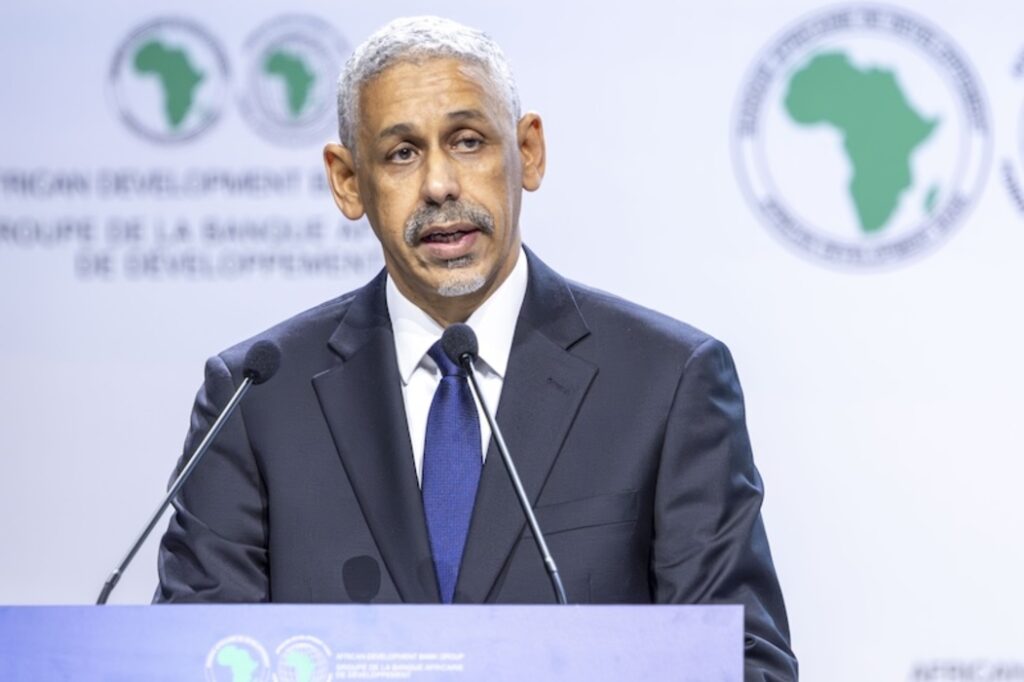
Following Sidi Ould Tah’s taking of office on September 1,2025,as the African Development Bank(AfDB)’s fifth president, Secretary-General António Guterres, framed the challenge before him without the least ambiguity: steering investment in Africa’s renewable energy, which he described as “the economic opportunity of the century.”
Africa’s population of 1.5 billion people over half of which is said to be under the age of 25 years, does not only make her the world’s most youth populated continent, but also, it makes her the world’s most dynamic workforce. This ought to be leveraged most productively for changing her development narrative.
A rising digital economy and rapid urbanization are driving new markets and fast-growing domestic business sector with rising demand for energy and thus, the need for Africa’s executive, policymakers and all stakeholders to adopt pragmatic and measured action approaches regarding the issue of energy deficit has become more imperative than ever before.
Africa’s Unique Selling Points
Fossil Fuels (oil and gas)
Africa holds over 125 billion barrels of proven crude oil reserves and massive natural gas deposits, positioning the continent as a vital power player in global energy.
The major industry players on the continent are led by Libya with roughly 48.4 billion barrels, followed by major traditional producers like Nigeria, Angola, and Algeria.
The emerging hotspots frontier basins in Namibia (such as the Orange Basin discoveries by TotalEnergies and Galp) and Ivory Coast (Baleine Field) show multi-billion-barrel potential.
Natural Gas & LNG
About 40% of global new gas discoveries over the last decade occurred in Africa, with major liquefied natural gas (LNG) projects advancing in Mozambique, Senegal, and Mauritania.
Renewables
Africa holds an estimated 10,000 gigawatts (GW) to nearly 482,000 GW of solar potential alone, representing roughly 39% of the entire global renewable energy potential while wind energy’s capacity stands at about 71,778 GW.
Solar: Accounts for 60% of the world’s best solar resources, holding massive multi-terawatt generation capacity.
Wind: Offers tens of thousands of gigawatts in overall theoretical capacity across open plains and coastal corridors.
Hydroelectric: Features roughly 350 GW of estimated potential, though a major part remains undeveloped.
Geothermal: Concentrated heavily along the East African Rift system, providing high baseline power capability.
The Emerging Critical Minerals Paradigm
Africa holds approximately 30% of the world’s total critical mineral reserves, playing a vital role in the global energy transition and green technologies.
- Platinum Group Metals (PGMs): Roughly 90% of global reserves.
- Cobalt: About 56% to 70% of global reserves (with the Democratic Republic of Congo alone accounting for around 70% of production).
- Manganese: Over 54% to 85% of global reserves depending on the specific metric.
- Chromium: Around 36% to 80% of global reserves
The Irony:Energy Poverty Amidst Abundant Resources
Despite the foregoing outlined combined fossil and renewable energy resources endowment potential, about 600 million people lack electricity and 900 million lack clean cooking access on the continent.
Only a tiny fraction of the huge potential is actively utilized—about 1% for solar PV, 6% for geothermal, 7% for wind, and 11% for hydro. These deficits continue to constrain industrial growth, healthcare delivery, education, employment creation, and overall economic transformation.
Why Renewable Energy Adoption Matters
The adoption of renewable energy by African communities, experts say, is not just an energy solution, but a healthy one too. Air pollution, which scientists say was partly contributed to by dirty cooking fuels and coal was the second leading risk factor for deaths across Africa in 2020, claiming 1.1 million lives, with 63 per cent of the deaths attributed to household air pollution.
Africa’s energy and by extension, financial poverty situation, that accounts for lack of immediate green transition readiness provides strong grounding for legitimate transition justice concerns.Thus,the positing of the Africa Energy Chambers that, the continent shouldn’t be stampeded into adopting an abrupt halt in fossil fuel exploration and production, but should be allowed to embark on her own green energy transition plans as it is fair to her under her given peculiar economic circumstances, is plausible.
The Underlying Issues
1.Funding Gap
The African Research Energy Research Unit report (Case Study), published in March 2026, titled, “Financing Africa’s Energy Infrastructure: Assessing Investment and Economic Implications” examines the scale of Africa’s energy infrastructure financing gap, the economic consequences of underinvestment, and the most viable mechanisms for mobilizing capital to meet future demand.
Using secondary data from international institutions such as the World Bank, African Development Bank (AfDB), International Energy Agency (IEA), and IRENA, the study combines quantitative investment-gap analysis with qualitative assessment of financing models and policy frameworks.
Findings show that Africa requires between $110 billion and $200 billion annually to achieve Sustainable Development Goal 7 and broader energy transition objectives, compared with current annual investment flows of about $90 billion.
Specifically, universal electricity access by 2030 requires around $55 billion annually, yet only about $10 billion is currently directed toward access expansion.
The largest financing shortfalls exist in transmission and distribution networks, decentralized off-grid systems, and clean cooking infrastructure.
The report further reveals that private investment remains concentrated in a few relatively mature markets such as South Africa, Morocco, Kenya, and Ghana, while many African countries continue to struggle with weak utilities, non-cost-reflective tariffs, regulatory uncertainty, sovereign risk, and currency volatility. These factors reduce project bankability and raise the cost of capital.
2.Exporting Crude, Importing Fuel: Africa remains a net exporter of crude oil but a net importer of refined petroleum products, missing out on higher economic values until recent local refining shifts like Nigeria’s Dangote complex.Despite holding nearly, a third of global critical minerals reserves, Africa captures a small fraction—estimated between 5% and 10%—of the financial value from these resources, as most minerals are exported in raw, unprocessed forms
3.Socioeconomic Gaps: Critics and reports note that resource extraction often fails to create broad local jobs or shield nations from global boom-and-bust cycles exacerbated by the associated socio-ecological cost of minerals extraction with particular reference to the Niger Delta region in Nigeria scenario.
.4.Infrastructure Deficits: Roughly 600 million people across the continent lack reliable electricity access due to weak transmission networks and sparse rural grids. Ref: Jan 24, 2025.GGTN Africa You Tube video news
5.Financial Barriers: High capital costs, currency risks, and regulatory hurdles limit large-scale project deployment.
6.Policy barriers and financial constraints: In his reflection, Abay Yimere, Postdoctoral Scholar in International Environment and Resource Policy, The Fletcher School, Tufts University, faults policy barriers and the debt-laden climate finance mechanism for the development and uptake of renewable energy projects in Africa. The abundance of critical mineral reserves like lithium and cobalt ought to be factored into the quest for Africa’s expansion of its renewable energy capacity.
Mitigating the Challenges, Unlocking the Potentials
Leo Echard, Policy Officer at Global Solar Council and lead author of “African Market Outlook for Solar PV: 2025-2028”, highlighted that “There is no shortage of excellent solar resources and political ambition in Africa. Many projects are struggling to secure financing because of high interest rates, currency risks, and lack of guarantees. If we can reduce the cost of capital, Africa could become one of the fastest-growing solar markets in the world.”
Emerging Alternative Financing Models
Aside the age-old conventional interest-based borrowings with particular to Eurobonds, African governments would need to explore other alternative financing models not limited to the following:
- Blended finance facilities such as the Sustainable Energy Fund for Africa (SEFA), climate finance platforms, public-private partnerships.
- The World Bank/AfDB Mission 300 initiative demonstrate that well-structured interventions can mobilize significant resources and accelerate electrification.
- Equity and Venture capital
- Green sukuks (non-interests’ bonds) a Sharia-compliant financial certificate—often called an Islamic bond—whose proceeds are used exclusively to fund environmentally sustainable and climate-friendly projects
- Leveraging of Sovereign Gold Reserves to raise cost effective financing for public infrastructure projects through Gold Monetization Schemes (GMS) and Gold Stock Exchanges (GSE) frameworks which also draws investors including Sovereign Wealth Funds.
- The emerging shift to local processing of raw minerals and value addition for exports would also help generate more revenue for governments to have the capacity to be able to finance public infrastructure without resorting borrowing at high cost. Africa loses a lot from exporting crude oil, gold ore, cocoa, etc.
- Addressing the annual Illicit Financial Flows menace.
Investment Opportunities in Africa’s Renewable Energy
Despite its vast resources, Africa has yet to fully harness its renewable energy potential. Currently, less than 1 percent of solar, 6 percent of geothermal, and 11 percent of hydroelectric power are being utilized. To unlock these opportunities, billions in private sector capital, likely from outside the continent, will be needed.
Africa receives roughly 3% of global energy investment ($110 billion out of $3.4 trillion worldwide) despite holding nearly 20% of the world’s population. The continent represents a major paradox in the global green transition: it possesses immense natural potential to fuel the clean energy revolution, yet faces severe financial and infrastructure deficits at home.
In 2023, during the inaugural Africa Climate Summit (ACS1) hosted by Kenya, the continent’s leaders unified and rallied for international support to scale renewable energy capacity to 300 GW by 2030. This, the Nairobi Declaration stated, would “address energy poverty and bolster the global supply of cost-effective clean energy for industry.”
To drive this ambition, at COP28, in Dubai, the Accelerated Partnership for Renewables in Africa (APRA) was launched and consists of 10 African countries including Djibouti, Ethiopia, Ghana, Kenya, Mozambique, Namibia, Rwanda, Sierra Leone, Uganda and Zimbabwe, with support from international partners such as Denmark, Germany, the United States, and the United Arab Emirates.
Why Global Investments in Africa’s Energy matter
Adequate capital investments in Africa’s energy sector aren’t just about Africa as a continent per say. Substantial and adequate amount of investments in Africa’s energy sector is not only important for addressing Africa’s energy poverty, but would also, inure to the benefit of the rest of the world.
Conclusion
While the call for beefing up investments in Africa’s energy mix is important, governments of the individual countries should also take more responsibility in putting their houses in order.
African countries with rich minerals resources endowment ought to ensure crafting and implementation of fit-for-purpose policy frameworks for prudent minerals resources governance, management and moreso, responsible and sustainable minerals extraction and utilization to the maximum benefit of their gross national economies and the benefit of the rest of the world. Striking a meaningful balance between wealth generation and environmental health for sustainable development would be most crucial. Prudent management and maintenance of infrastructure that has been invested in would also be crucial
References:
1.Africa Climate Insights online article, title, “Africa’s Push and Progress in Renewable Energy Scale-up”, Published, August 26,2025,2.GGTN Africa news “Africa’s untapped renewable energy potential”,3.UN Africa Renewal article, “Critical Minerals can Power Africa’s Structural Transformation” published,18th August 2026,4.Statement of UNDP Resident Representative in Ivory Coast, July 2026,5.Mo Ibrahim Foundation Research Article, “Africa’s Vast Green Potential Should not be Limited to Renewable Energy” published, 04 November, 2021,6. Bridgewater Insights, “Green Investment: Unleashing Africa’s Renewable Energy Potential through FDI”, 29th April 2025,7.Climate Action Platform, Africa, “Massive Untapped Renewable Energy Potential”,8. IFC,” Exploring Africa’s Untapped Wind Potential,2020, 9.IRENA, The Renewable Energy Transition in Africa,2021,World Bank Group, Knowledge Series for Energy and Extractives,2010/2011 Global Practice