
Moment for Women Alliance host virtual Summit
Story: Mohammed A. Abu
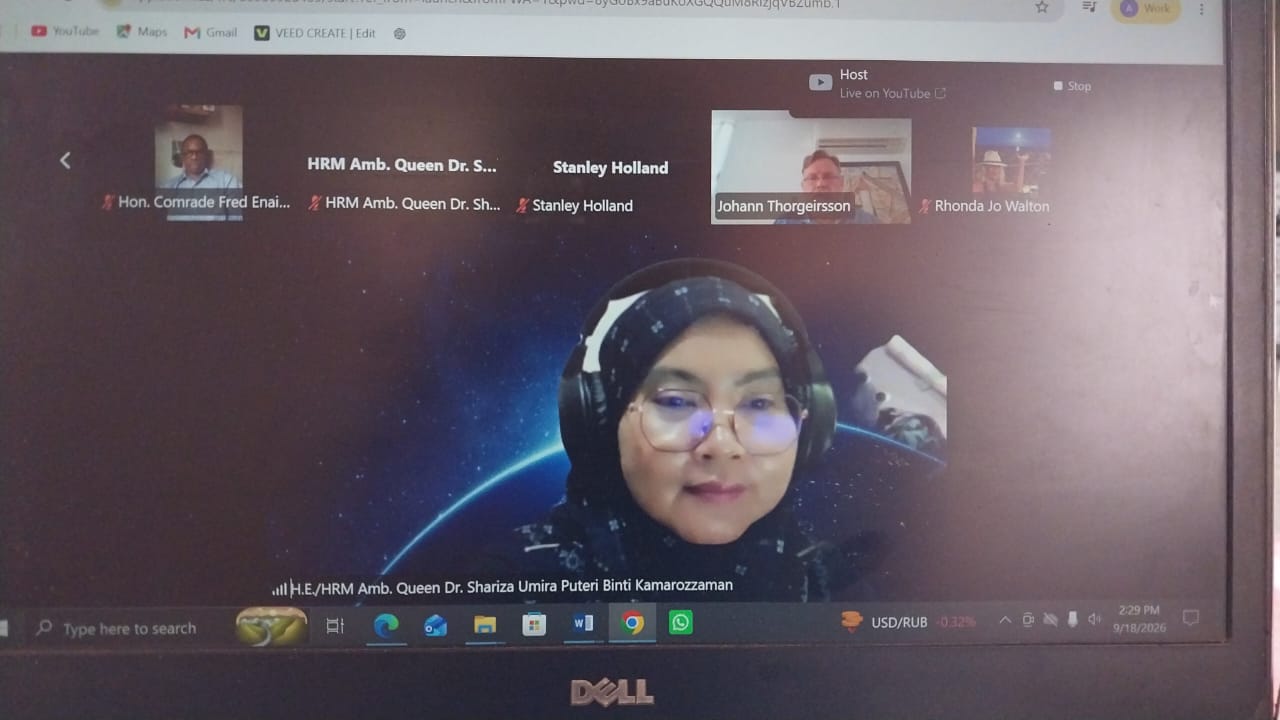
Speakers and panelists representing women’s rights advocates, civil society organizations, political actors, governance stakeholders, media professionals, and allies committed to advancing women’s meaningful participation in Nigeria’s democracy, have unanimously drummed home the need for collective and shared responsibility driven affirmative action for the desirable impact at both state and societal levels towards addressing Nigeria’s persistent democratic deficit that affects women who constitute half of the national population.
They were speaking during the Let Women Vote Nigeria 2027 Summit convened by the Moment for Women Alliance, on Friday, 18th September,2026.
Held under the theme, “Women Cast the Votes, But Who Holds the Power?”, the summit examined what it will take to move women from voters and supporters to candidates, lawmakers, decision-makers, and leaders ahead of Nigeria’s 2027 General Elections.
In her welcome message, Mrs. Blessing Micheal, AGE Executive Director, in her welcome message, she said the summit is part of the organization’s continued commitment to advancing the rights, leadership and meaningful political participation particularly as Nigeria moves towards 2027 General elections. Today we are gathered around a very important questions, “Women casts the votes-but who holds the power?”.
Women’s political participation the speakers and panelists contended, must go beyond casting votes to supporting them with practical pathways to contest, access resources, receive fair media coverage, gender security and political justice, influence decision making, and shape the policies that affect Nigeria’s future.
They made a clarion call for adoption collective efforts approach on the part of the relevant state democratic political governance institutions thereby taking full responsibility by passing pending Bills intended to deal with the issue, adopting reform measures where deemed expedient, so as to ensure execution and enforceability as it relates to already existing legal frameworks and enacting new ones if needs be as it relates to violence against women in politics.
The need for political parties to adopt party constitutional and policy reforms that ensures democratic governance gender balance at the party level with particular reference to the male-female decision-making parity at the grassroot level was they also pointed out. In the same vein they also attached importance to the issue of political financing practices that tends to play more to the advantage of male politicians and putting their women counterparts in a disadvantaged position. They therefore advocated for reasonable and fair nomination cost as well special provisions for women to put them at par with their male counterparts.
The issue of women playing a vital role in mobilizing at the grassroot to get votes, campaign, fundraise, and support political movements ought to have entitled them to enjoy dividends from their labour in form of playing leadership and decision-making roles at the grassroot level too. “Yet, too many continue to face barriers when they seek to contest, lead, and influence public policy” they lamented.
At the social level, they also echoed the need for awareness creation, education and need for psychic reform and removal of the social constructs that tends to misrepresent women in the negative light as not fit for leadership roles but only good for the kitchen. Competence and integrity should be the major determinant factor for entrusting people with leadership roles and not financial means nor,genda.
The important role of religious organizations, traditional institutions, Civil Rights Organizations (CROs), Think Tanks, Community Based Organizations (CBOs) among others, could also play in terms awareness creation, educations was also highlighted They also raised the important issue of drawing lessons from other political jurisdictions worldwide and avoid reinventing the wheel approach.
Scaling up Nigeria’s women’s leadership role their influence in public policy dialogues, heading Parliamentary Committees on finance, education, decision making, among others, they underscored, was more than an ordinary gender issue and has to be better appreciated as a human rights, governance and national development project crucial for the country’s forward march. They also cautioned against the marginalization of half of her population from democratic governance and vital decision-making trajectory since that is an affront to inclusive national development.
The vital role of the media and digital communication in shaping the narrative of the ensuring all inclusiveness in governance for sustainable development was also given priority attention
As one of the speakers noted, “Women are not only voters, we are citizens with ideas, experience, and the right to shape the decisions that affect our lives.”
Another panellist emphasized, “We cannot continue to celebrate women’s participation at the ballot box while accepting their absence from positions of power, and Representation must be the next measure of progress.”
“Women should not have to choose between being visible during elections and being invisible when leadership positions are shared,” a panellist said. “If women are good enough to campaign for others, they are good enough to lead.”
The road to 2027 demands sustained action before, during, and beyond election day. It requires political will, stronger accountability, inclusive party structures, responsible media coverage, and collective action from all stakeholders.
As one speaker put it, “The question is no longer whether women are ready to lead. The question is whether Nigeria is ready to remove the barriers standing in their way.”
Why this Matters
Global and Regional Rankings: The impending 2027 elections comes on the back of Nigeria’s ranking near the bottom globally (around 177th out of over 180 countries) according to data from the Inter-Parliamentary Union (IPU) and UN Women. She also trails far behind the Sub-Saharan African regional average, where women hold over 27% of parliamentary seats.
Women are 50% of the population, over 47% of voters, but less than 5% of lawmakers. In the 10th National Assembly 2023 to 2027, we have 3 women in a 109-member Senate 2.8% and 17 women in a 360-member House (4.7%) Combined, that’s 20 out of 469 about 4.2%.
To watch the full recording on YouTube, click below link
https://www.youtube.com/live/F7p8NDrriDg?si=S9urBFmRrdwU9An5